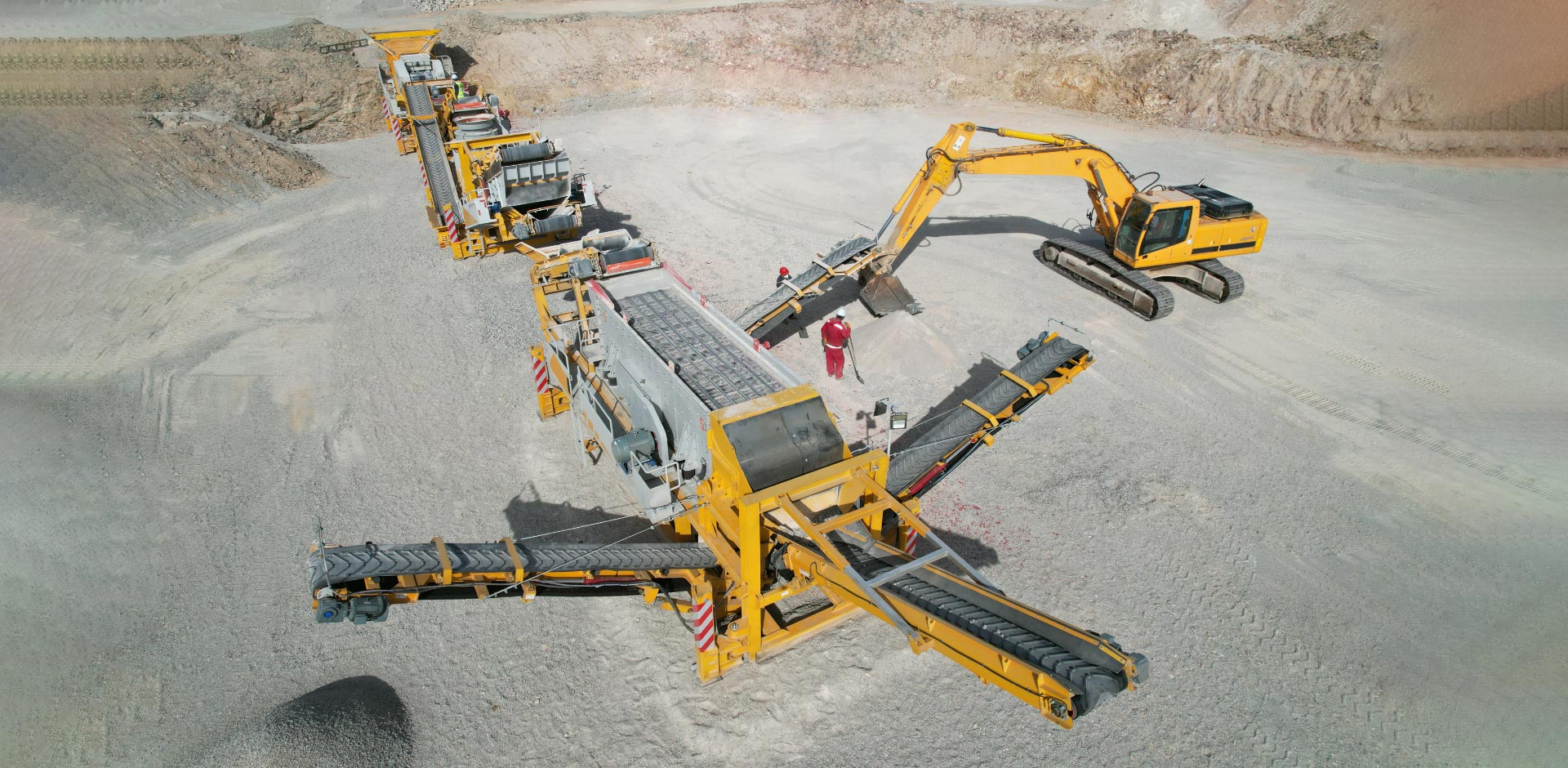
For small and medium-sized mine operators across Latin America, historical mine waste and low-grade tailings represent an untapped financial asset waiting to be monetized. However, traditional mineral recovery approaches often demand massive capital expenditure, extensive civil engineering, and years of site preparation before generating any meaningful cash flow. Rather than committing millions of dollars to permanent stationary installations, forward-thinking operators are deploying a flexible mobile stone crusher(trituradora de piedra móvil) to process tailings directly at the waste dump site. This highly adaptable, low-capex operational model turns historical mineral waste into steady revenue while completely avoiding prohibitive fixed infrastructure investments.
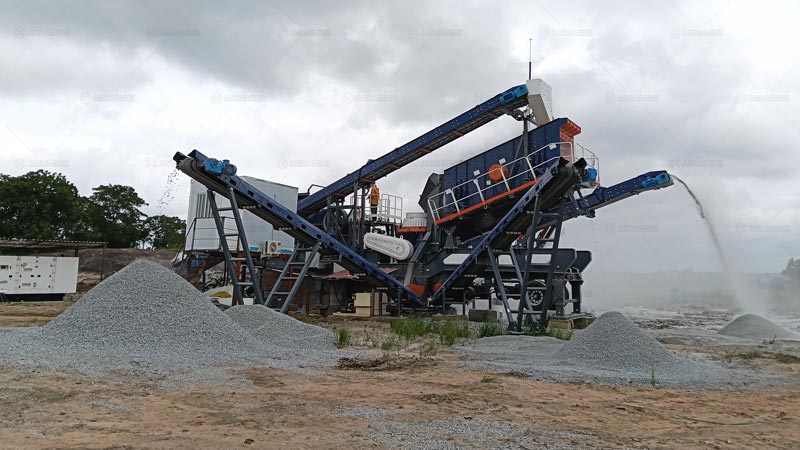
The Tailings Opportunity for Latin American Mine Owners
Decades of intensive mining activity across mineral-rich regions in Peru, Mexico, Colombia, and Chile have accumulated billions of tons of tailings containing residual precious and base metals. Older processing technologies often suffered from lower recovery efficiency, leaving significant economic value behind in accumulated waste dumps and tailings dams. Today, secondary processing allows small and medium-sized mine owners to extract these remaining resources profitably, provided material handling and preparation costs remain strictly controlled.
By using a mobile stone crusher on-site, miners gain distinct operational advantages over traditional fixed processing lines:
- Zero Civil Infrastructure Costs: Completely eliminates expensive concrete foundations, permanent steel structures, and long civil engineering development cycles.
- Direct Site Access: Equipment moves directly to tailings heaps, dramatically reducing haulage distance and heavy transport equipment fuel consumption.
- Rapid Site Deployment: Complete processing circuits can be fully set up, commissioned, and operational within a few days of site delivery.
- Flexibility Across Multiple Sites: When a specific tailings deposit is fully processed, the mobile stone crusher easily moves to the next dump location without dismantling expense.
Reducing Initial Capex for Small and Medium Mining Operations
The primary barrier to entry for junior mining enterprises is securing capital for traditional stationary plant design and construction. Evaluating the total price of stone crushers(precio de trituradoras de piedra) reveals a stark financial difference between traditional stationary facilities and modular wheeled units. Stationary processing circuits require substantial upfront investment in land preparation, heavy electrical substations, concrete retaining walls, and fixed conveying networks. Conversely, modular mobile units integrate feeding, crushing, screening, and power generation directly onto a single heavy-duty chassis.
| Investment Criteria | Stationary Crushing Line | Wheeled Mobile Plant |
|---|---|---|
| Civil Infrastructure | High (Reinforced concrete & steel) | Minimal (Compact level ground) |
| Installation Timeline | 6 to 12 Months | 3 to 7 Days |
| Relocation Cost | Extreme (Demolition required) | Low (Towable chassis) |
| CapEx Risk | High fixed-asset risk | Low modular asset risk |
When comparing the upfront price of stone crushers against total civil construction costs, small miners quickly realize that mobile equipment preserves critical working capital. This capital can then be redirected into ongoing mineral extraction, chemical leaching circuits, environmental compliance programs, or local community development initiatives.
Primary Oversize Reduction at the Tailings Heap
Coarse tailings heaps often contain consolidated boulders, host rock fragments, and hard overburden materials that disrupt automated material handling systems. Deploying a heavy-duty jaw-based mobile stone crusher breaks down these oversized chunks into uniform intermediate fractions. This primary stage protects downstream equipment from premature mechanical wear and overload jams while ensuring a smooth, continuous flow of material for secondary processing.
Secondary Fine Reduction with High Compressive Force
To liberate valuable mineral grains encapsulated within hard quartz or siliceous host rock, secondary processing requires high crushing force and precise gap adjustments. Integrating a hydraulic cone crusher(trituradora cónica) within a wheeled secondary station ensures consistent product sizing and fine particle reduction.
The inter-particle compressive crushing action of a high-performance cone crusher maximizes mineral liberation efficiency while minimizing power consumption per ton processed. Furthermore, modern automated controls on the cone crusher allow operators to adjust closed-side settings quickly to adapt to changing tailings hardness and feed gradations.
Case Study: Chilean Tailings Recovery Success
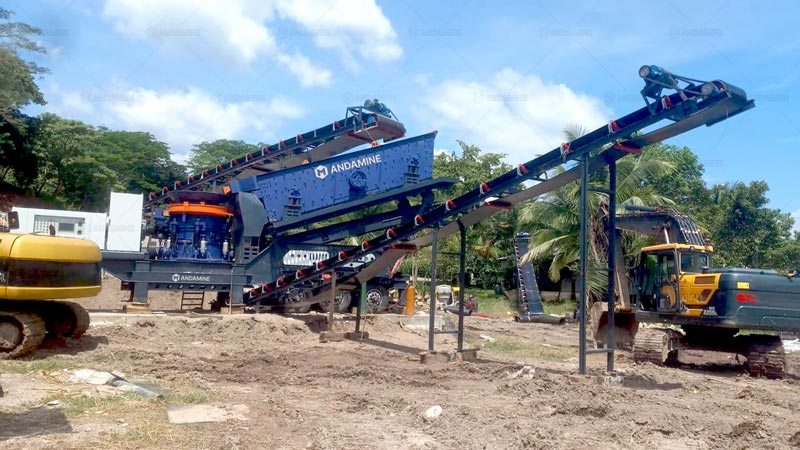
Operational results in South American mining hubs demonstrate the clear commercial value of mobile crushing setups. For example, a medium-scale gold and copper recovery operation successfully established a stone crushing plant Chile project that processed 150,000 tons of historical tailings per year.
By designing a two-stage modular stone crushing plant Chile(planta chancadora de piedra Chile) mine operators bypassed multi-million-dollar plant construction costs entirely. The stone crushing plant Chile team achieved full production capacity within two weeks of arrival, achieving a complete return on investment in under eight months.
Optimizing Operational Costs in Remote Mining Sites
Remote Latin American mining sites often face limited grid connectivity, high transport costs, and harsh terrain. Wheeled mobile equipment directly addresses these regional challenges through hybrid dual-power systems, allowing operators to run on integrated diesel generators during initial site setup and seamlessly transition to local electrical grid power when available.
When analyzing the lifetime price of stone crushers, ongoing operating expenses such as fuel consumption, wear-liner replacement, and site transport logistics far outweigh initial purchase costs. Wheeled plants significantly reduce these ongoing operational expenses by eliminating long-haul haulage cycles from waste heaps to distant central processing facilities.
Unlocking the full financial value hidden within Latin America’s low-grade mine tailings does not require multi-million-dollar capital investments or complex fixed infrastructure. By adopting flexible, multi-stage wheeled crushing configurations, small and medium-sized mine owners can eliminate unnecessary civil infrastructure costs, lower operating expenses, and sustainably revitalize historic mining waste into highly profitable mineral assets.