Warehouse extensions near major ports in the Philippines often require concrete work to be completed while existing storage and logistics operations remain active. Additional loading bays, expanded storage areas, equipment foundations, reinforced floor sections, and access ramps may all form part of the construction scope. These projects frequently involve restricted working space, active vehicle routes, and limited opportunities to close operational areas for extended periods. Concrete supply and placement therefore need to be carefully coordinated.
A portable concrete mixer pump combines concrete mixing and pumping functions in one compact equipment configuration. Instead of arranging a separate concrete mixer and pump, contractors can prepare concrete near the work area and convey it through pipelines to the required placement point. This arrangement can be useful for warehouse projects where ready-mixed concrete trucks cannot reach every pouring location or where the construction area is separated from the main material storage zone. Selecting the right equipment, however, requires consideration of foundation dimensions, floor repair volumes, pumping distance, concrete mix requirements, and site accessibility.
Concrete Construction Requirements for Warehouse Extensions
New Foundations and Structural Additions
Warehouse expansion projects often begin with foundations for additional columns, steel structures, loading platforms, or covered storage sections. These elements require concrete placement at specific locations, sometimes behind existing buildings or alongside operational loading areas. Contractors may also need to construct equipment foundations for conveyors, forklifts, generators, and other warehouse machinery.
The concrete volume for individual foundations may be relatively modest, but placement accuracy remains important. Workers must deliver concrete into excavated or formed sections without excessive handling or interruption. Where several foundation points are distributed across a large site, a flexible pumping arrangement can simplify the supply process.
Floor Extensions and Damaged Concrete Repairs
Existing warehouse floors can deteriorate under repeated forklift movements, heavy pallet loads, truck traffic, and equipment vibration. Expansion work may also require connecting new floor sections to existing slabs, repairing damaged joints, or rebuilding concrete around loading bays.
These tasks involve different concrete volumes and placement conditions. A large floor extension may require continuous concrete supply, while localized repairs may involve smaller batches delivered to isolated sections. Equipment selection should reflect both types of work rather than focusing exclusively on the largest planned pour.
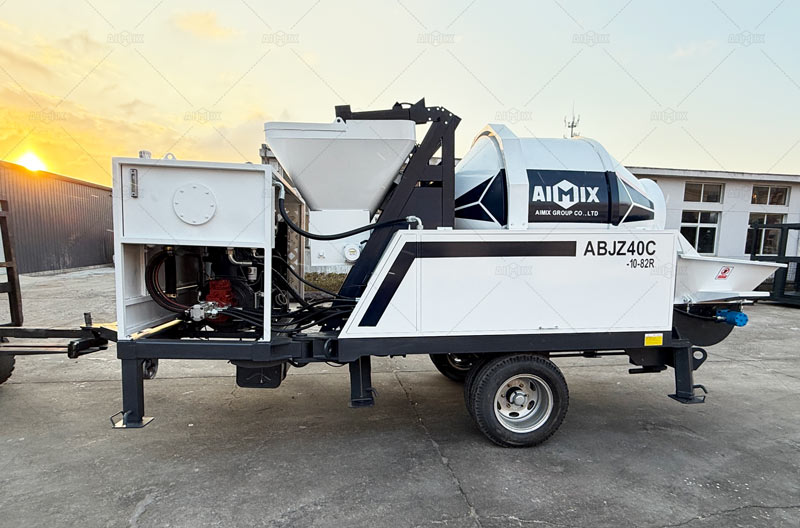
Why Portable Concrete Mixer Pumps Suit Restricted Port-Area Sites
Integrated Mixing and Pumping in One Equipment Setup
A portable concrete mixer pump combines a concrete mixer and pumping mechanism in one machine. Aggregates, cement, water, and other approved mix components are proportioned and mixed before the fresh concrete is conveyed through a delivery pipeline.
For warehouse contractors, this integrated arrangement can reduce the need to coordinate separate mixing and pumping machines. It can also simplify equipment positioning when the available working area is limited or when concrete must be placed beyond the immediate mixing location.
When evaluating a portable concrete pump for sale, contractors should check whether the equipment can handle the required concrete mix, pumping distance, and expected daily production volume. A compact machine is not automatically suitable for every foundation or floor application.
Flexible Operation Around Existing Logistics Activities
Port-adjacent warehouses often have restricted access because of container handling, truck circulation, cargo storage, and ongoing loading operations. Construction teams may need to work within designated sections while keeping other areas accessible.
A portable mixer pump can be positioned near the active construction zone, provided that the ground is stable and sufficient space is available for material loading, machine operation, and pipeline installation. The delivery pipeline can then be routed toward foundations or floor sections that are difficult for concrete trucks to approach directly.
This arrangement may reduce unnecessary vehicle movement inside the work zone. It also allows contractors to coordinate smaller concrete pours around the warehouse’s operating schedule.
Applications in Warehouse Foundations and Floor Repairs
Concrete Placement for Equipment and Column Foundations
New warehouse extensions may require isolated foundations for steel columns, machinery supports, loading equipment, and other structural components. These foundations are often located at different points across the construction area.
A portable concrete mixer pump can supply concrete through a pipeline to individual foundation locations. This is particularly useful when the mixing equipment cannot be positioned directly beside every excavation or formwork section.
Before pumping, contractors should confirm the specified concrete grade, aggregate size, reinforcement arrangement, and required placement method. The pipeline route should also avoid unnecessary bends and sharp changes in elevation that could increase pumping resistance.
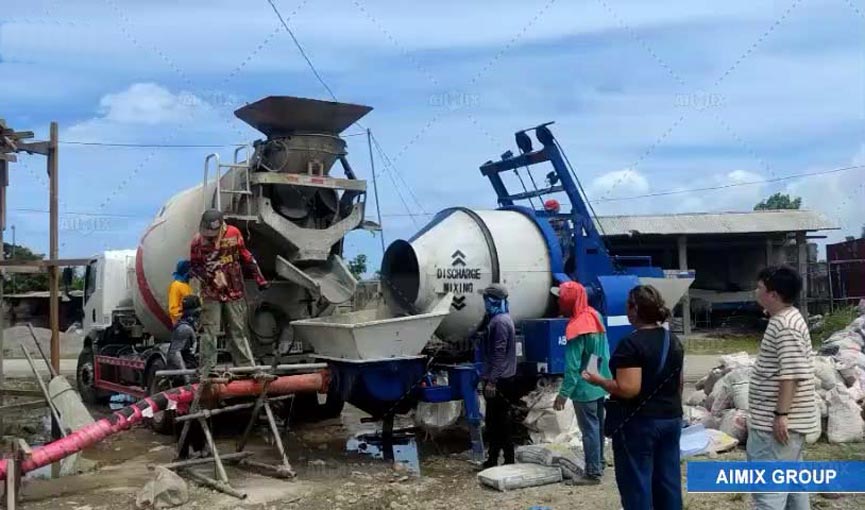
Floor Patching, Slab Extensions, and Loading Bay Repairs
Concrete floor repairs require attention to surface preparation as well as concrete delivery. Damaged or unsound concrete should be removed, the repair area cleaned, and the substrate prepared according to the project specification. Reinforcement, bonding materials, and joint details should be checked before placement where applicable.
For larger slab extensions, the contractor must coordinate concrete supply with formwork, reinforcement, screeding, and finishing crews. A portable concrete mixer pump can help deliver fresh concrete to the placement area, but it does not replace the need for proper floor preparation, compaction, leveling, and curing.
Loading bays and truck access ramps may also require concrete reconstruction. Their surfaces must be designed for the expected wheel loads, turning movements, drainage conditions, and operational demands.
Choosing the Right Pumping Capacity and Configuration
Match Output with the Size and Frequency of Concrete Pours
The appropriate machine capacity depends on the volume of concrete required per pour, the available working time, and the speed at which the placement crew can handle fresh concrete. Small foundation repairs and isolated equipment bases may not require the same output as a large warehouse floor extension.
Contractors should calculate the expected concrete volume and pouring duration before comparing equipment models. They should also account for mixing cycle time, material loading, pipeline distance, and interruptions caused by site logistics.
A small concrete pump for sale may be sufficient for localized repairs and modest foundation work, provided its technical specifications match the concrete mix and delivery requirements. For larger floor pours, a higher-output configuration or additional concrete supply arrangements may be necessary.
Check Pipeline Distance and Concrete Mix Compatibility
Pumping performance depends on more than the machine’s rated output. Horizontal conveying distance, vertical lift, aggregate grading, concrete slump, and pipeline diameter all influence actual delivery performance.
Concrete with unsuitable proportions or excessive aggregate size can increase pumping resistance and create blockages. Contractors should follow the pump manufacturer’s requirements for maximum aggregate size, mix consistency, and pipeline configuration.
The equipment supplier should be given the expected pumping distance, elevation difference, concrete grade, and aggregate specifications before a model is selected.
Site Preparation and Concrete Placement Planning
Arrange Material Storage and Equipment Access
A practical batching area needs sufficient space for cement, aggregates, water, and machine operation. Materials should be stored to prevent contamination and excessive moisture variation. In the Philippines, where rainfall and humid conditions can affect aggregate moisture, contractors should monitor water content and adjust the mix design in accordance with approved procedures.
The machine should stand on stable, level ground with adequate clearance for loading and maintenance. Drainage is also important. Standing water and muddy access routes can complicate material handling and create unsafe working conditions.
Coordinate Pipeline Routes and Warehouse Operations
Before pumping begins, the site team should identify the delivery route, secure pipeline connections, and inspect couplings and supports. Pipelines should not obstruct emergency access, forklift routes, or active loading areas.
Where construction takes place alongside ongoing warehouse operations, temporary barriers and clear work-zone controls can help separate workers from moving vehicles. Concrete pouring schedules should also be coordinated with warehouse management to minimize operational disruption.
Equipment Selection and Procurement Considerations
Compare Specifications, Accessories, and After-Sales Support
When comparing a portable concrete pump with mixer for sale, contractors should examine mixing capacity, theoretical pumping output, maximum aggregate size, pumping distance, motor or engine configuration, and overall machine dimensions.
The quotation should also identify included delivery pipelines, clamps, bends, cleaning equipment, wearing parts, and other essential accessories. These components influence whether the equipment can be deployed immediately after delivery or requires additional purchases.
Maintenance access and the availability of replacement parts should also be considered, particularly for projects with tight construction schedules.
Evaluate the Full Project Cost
The equipment purchase price is only one part of the investment. Contractors should consider transportation to the warehouse, site preparation, operator requirements, fuel or electricity consumption, pipeline installation, routine maintenance, and cleaning arrangements.
For projects involving several extension phases, the ability to reuse the machine across foundations, floor repairs, loading bays, and later structural work may improve equipment utilization. The final decision should be based on the total expected workload rather than the requirements of a single concrete pour.
Conclusion
Portable concrete mixer pumps can provide a practical concrete mixing and delivery arrangement for warehouse extensions near ports in the Philippines. Their integrated configuration is particularly relevant where construction areas are restricted, concrete placement points are dispersed, or existing logistics operations limit truck access.
For foundations, floor repairs, slab extensions, and loading bay reconstruction, contractors should select equipment according to actual concrete volume, mix specifications, pumping distance, and site conditions. Proper planning of material storage, pipeline routes, and work schedules is equally important. With these factors assessed in advance, a suitable portable mixer pump can support more coordinated concrete placement throughout the warehouse expansion project.