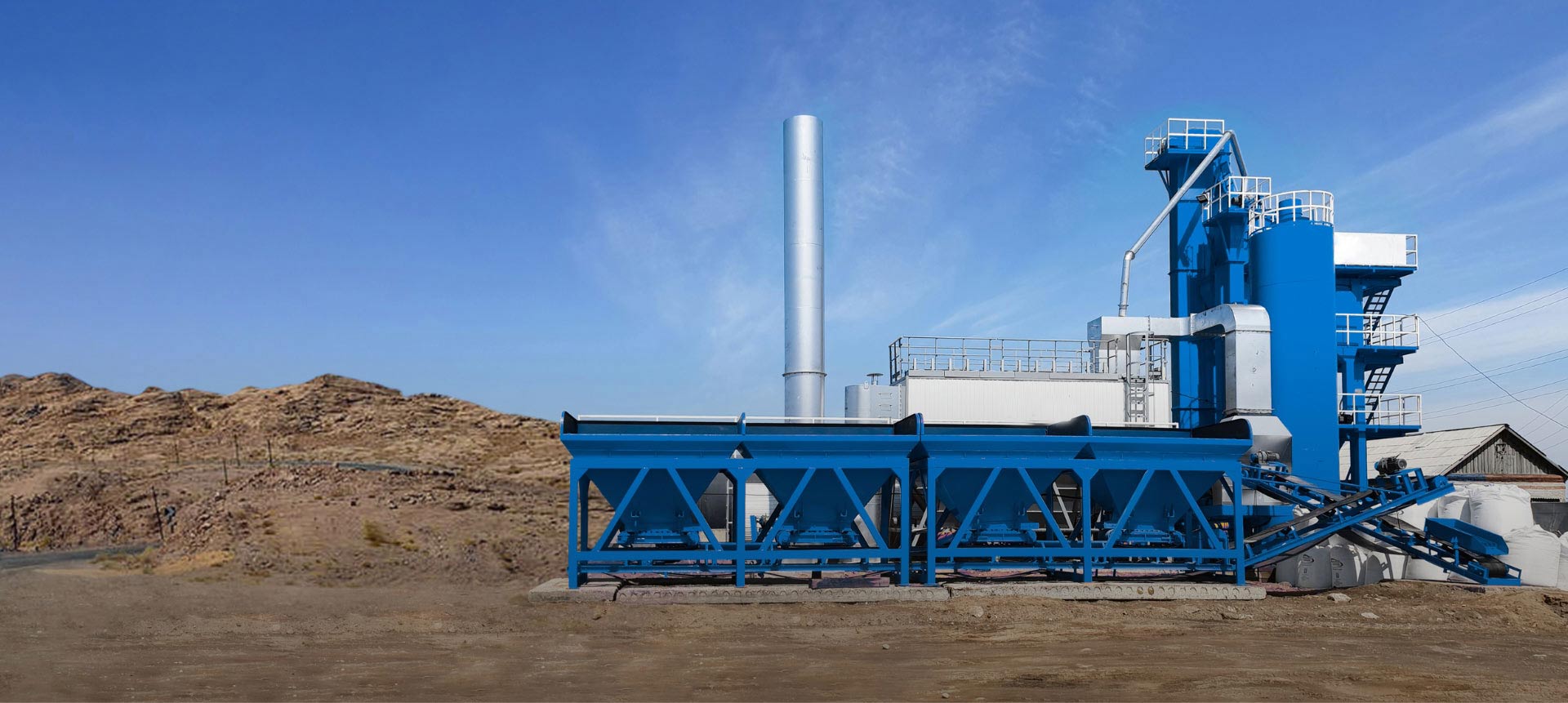
For a 10 km road resurfacing project, choosing an asphalt plant capacity is not simply a matter of picking the largest plant available. The right capacity depends on the road width, resurfacing thickness, asphalt density, daily paving target, haul distance, and project schedule. A plant that is too small can slow down paving and extend the project. However, an oversized plant can increase investment and operating costs without creating real value.
For many medium-sized road resurfacing projects, an asphalt plant in the 80–120 t/h range can provide a practical starting point. However, the actual requirement may be lower or higher after calculating the total asphalt demand and daily production target. Therefore, contractors should size the plant from the project backward rather than choosing capacity from the plant forward.
This guide explains how to estimate asphalt demand for a 10 km resurfacing project and how to match that demand with a suitable asphalt mixing plant capacity.
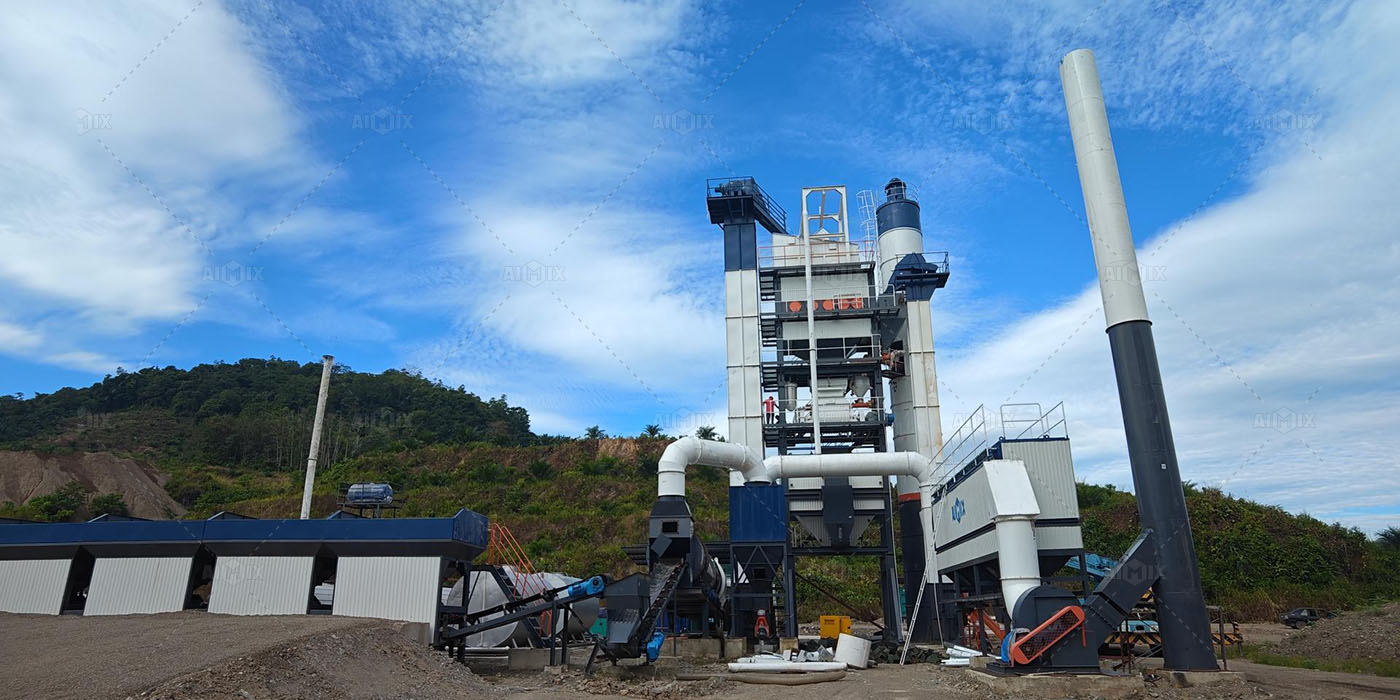
Start With The Total Asphalt Requirement
Before selecting an asphalt plant, the first question is not “How many tonnes per hour do I need?” It is “How many tonnes of asphalt will the project consume?”
The answer starts with four basic factors: road length, paving width, overlay thickness, and asphalt mixture density. Once these values are known, the approximate asphalt quantity can be calculated.
For contractors planning a complete production and paving setup, an asphalt mixer plant should be evaluated together with the material supply, storage, transport, and paving requirements rather than as an isolated machine.
Basic Asphalt Quantity Formula
A practical calculation is:
Asphalt quantity = Road length × Paving width × Overlay thickness × Asphalt density
All dimensions should use consistent units. Road length should be converted to meters, while thickness should also be expressed in meters.
For example, assume a 10 km road has:
- Road length: 10,000 m
- Average resurfacing width: 7 m
- Overlay thickness: 50 mm or 0.05 m
- Compacted asphalt density: about 2.35 t/m³
The approximate compacted asphalt volume would be:
10,000 × 7 × 0.05 = 3,500 m³
The corresponding asphalt mixture quantity would be approximately:
3,500 × 2.35 = 8,225 tonnes
Therefore, a 10 km road with a 7 m paving width and a 50 mm overlay could require roughly 8,200 tonnes of compacted asphalt mixture.
This example is only a planning reference. The actual quantity can change because of pavement design, density, milling depth, existing road conditions, mix type, thickness variation, and construction losses.
Calculate The Daily Asphalt Production Target
Once the total asphalt requirement is known, the next step is to determine how quickly the contractor needs to complete the resurfacing work. This is where plant capacity becomes important.
For example, if the project requires about 8,225 tonnes and the contractor plans to complete the main paving work in 12 working days, the average daily requirement is approximately:
8,225 ÷ 12 ≈ 686 tonnes/day
If the project works eight hours per day, the average production requirement becomes:
686 ÷ 8 ≈ 86 t/h
At first glance, an 80–90 t/h plant may appear sufficient. However, contractors should not size the plant exactly at the calculated average.
Road projects rarely operate at 100% of the plant’s rated capacity throughout the working day. Start-up, aggregate feeding, moisture variation, mix changes, truck loading, routine checks, and paving interruptions can reduce actual output.
Therefore, a plant with some production margin usually provides a safer operating window.
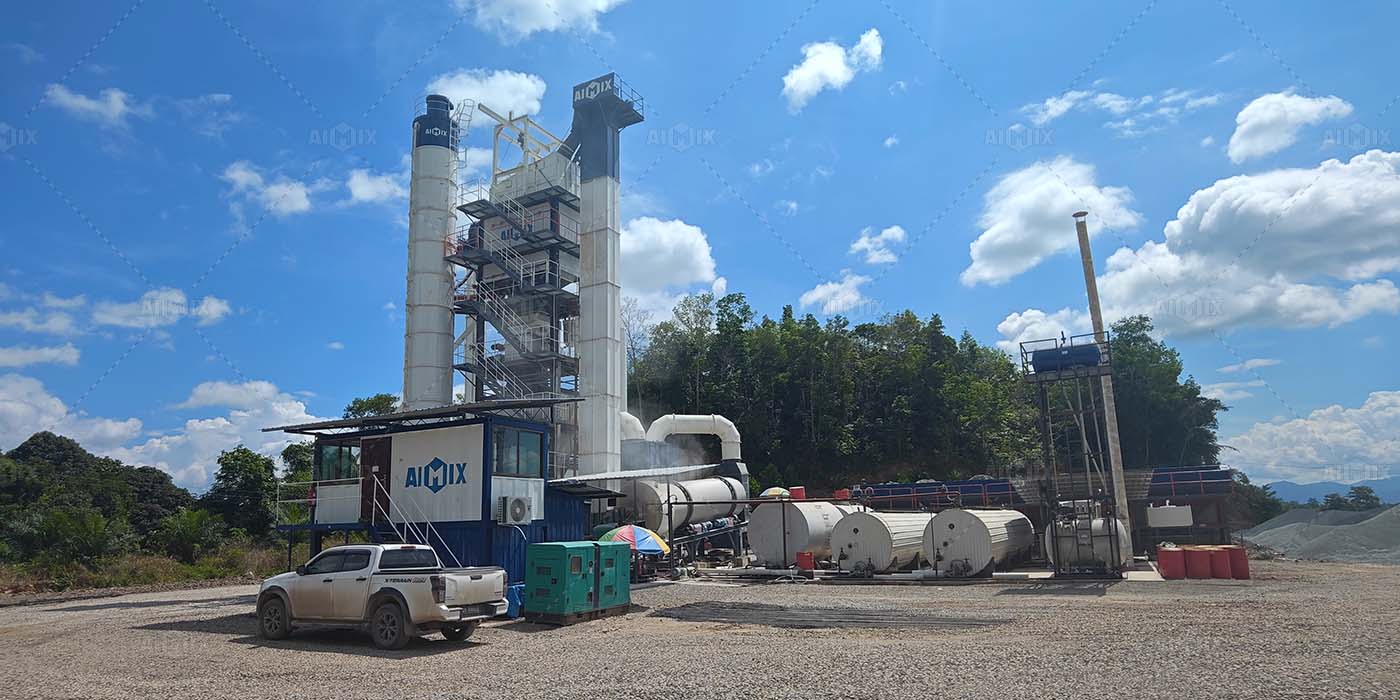
Why Rated Capacity Is Not The Same As Actual Output
An asphalt plant rated at 100 t/h does not necessarily produce 100 tonnes every hour for an entire eight-hour shift.
Actual production depends on aggregate moisture, mix design, burner performance, material supply, truck availability, loading efficiency, and operating conditions. The plant also needs time for start-up and shutdown.
For planning purposes, contractors can evaluate the plant using a realistic utilization factor rather than assuming continuous maximum production.
For example, if a 100 t/h plant operates at an effective 75–80% production level during the main working period, the practical output may be around 75–80 tonnes per hour under the specific project conditions.
That difference matters when the paving crew must maintain a continuous supply of hot mix asphalt.
What Asphalt Plant Capacity Fits A 10 Km Road?
With the asphalt demand and daily production target established, contractors can now compare different plant capacities.
| Plant Capacity | Approx. 8-Hour Rated Output | Typical Project Fit |
|---|---|---|
| 40–60 t/h | 320–480 t/day | Small resurfacing projects or lower daily paving demand |
| 80–100 t/h | 640–800 t/day | Medium road projects with controlled daily production |
| 120–160 t/h | 960–1,280 t/day | Faster schedules, larger paving crews, or multiple work fronts |
| 160+ t/h | 1,280+ t/day | Large daily demand or multiple concurrent projects |
These figures represent rated production, not guaranteed daily output. Actual production depends on site conditions and operating efficiency.
For the example requiring around 8,225 tonnes, an 80–100 t/h plant may work if the contractor has a moderate schedule and reliable material logistics. A 100–120 t/h plant can provide more production flexibility when the contractor wants to reduce the paving period or allow for operational interruptions.
Therefore, for many 10 km resurfacing projects, the decision often comes down to the balance between 80–100 t/h and 100–120 t/h, rather than simply choosing the biggest available plant.

When Should You Choose A Larger Asphalt Plant?
The total road length alone does not determine plant capacity. Two contractors may both resurface 10 km, but their production requirements can be very different.
The difference usually comes from the project schedule and daily paving strategy.
A Tight Construction Schedule
If the contractor must finish the 10 km section in a short period, daily asphalt demand will increase.
For example, producing 8,225 tonnes over 20 working days requires only about 411 tonnes per day. An 80 t/h plant can potentially cover that demand during a normal shift.
However, producing the same quantity over 8 working days requires more than 1,000 tonnes per day. The contractor may then need a larger plant, longer operating hours, or multiple production shifts.
Therefore, the project deadline can change the required plant capacity even when the road length stays exactly the same.
Multiple Paving Crews
A contractor may also use more than one paving crew or work on several road sections simultaneously.
In this case, asphalt demand can rise quickly. A plant that works well for one paving crew may become a bottleneck when two crews require continuous hot mix.
If multiple paving fronts operate at the same time, contractors should calculate the combined hourly demand before selecting the plant.
Long Haul Distance
Transportation also affects plant selection.
If the asphalt plant is located close to the road project, trucks can make more trips per shift. However, a long haul distance increases the cycle time for each truck. Traffic congestion can make the problem worse.
As a result, the plant may have enough production capacity, but the paving crew can still experience asphalt shortages because trucks cannot deliver the mixture quickly enough.
In such projects, contractors should evaluate the plant, truck fleet, and paving equipment as one production system.
Do You Need 100 T/H Or 120 T/H For A 10 Km Road?
This is one of the most practical questions contractors ask when planning a medium-sized resurfacing project.
A 100 t/h plant can be a good match when the daily asphalt requirement stays within a moderate range and the contractor has a stable truck fleet. It can also provide a reasonable balance between production capability and investment.
A 120 t/h plant becomes more attractive when the project has a tighter deadline, higher daily paving demand, longer operating hours, or additional asphalt projects that will use the plant after the 10 km project.
For example, suppose the contractor expects to consume 700 tonnes per day. A 100 t/h plant has a rated eight-hour capacity of about 800 tonnes. That provides some theoretical margin.
However, if the contractor expects 900–1,000 tonnes per day, a 120 t/h plant offers a stronger production position. The additional capacity can help absorb delays and maintain asphalt supply to the paver.
Therefore, the better question is not simply “Is 120 t/h better than 100 t/h?” The better question is “Will the additional capacity improve my project schedule or future plant utilization enough to justify the extra investment?”
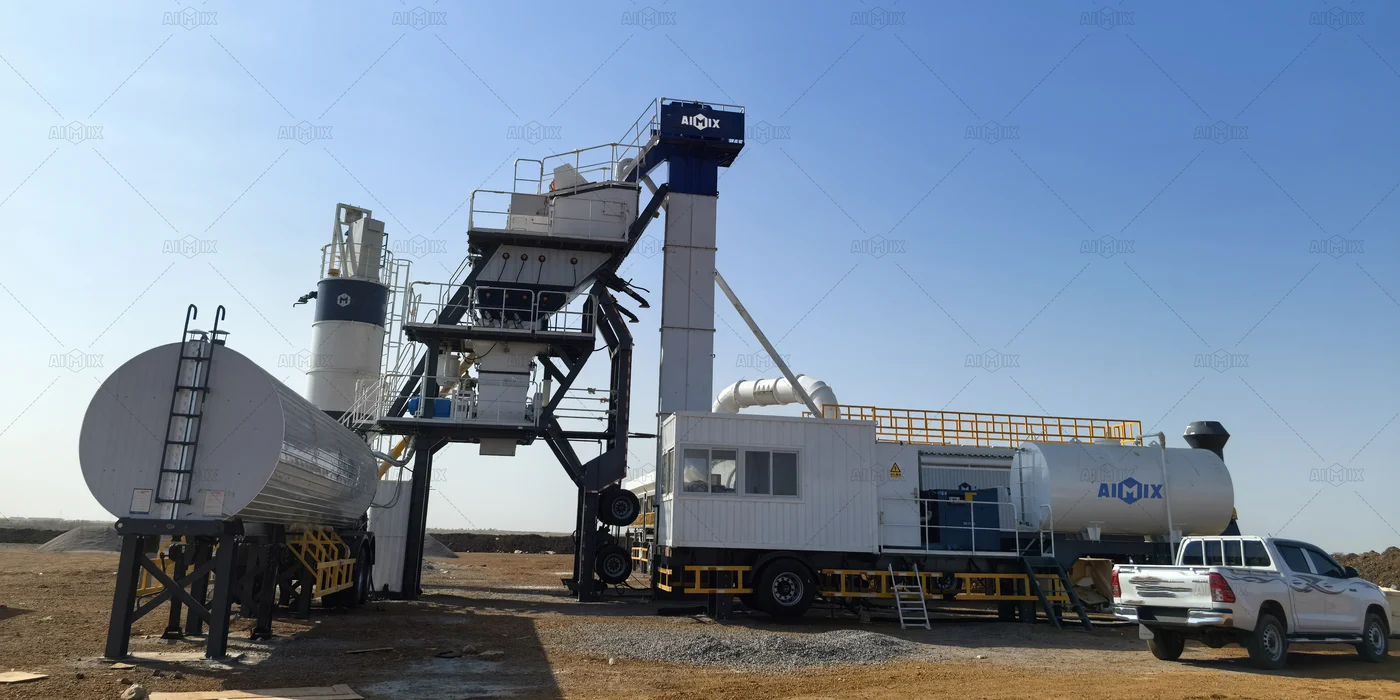
Consider The Asphalt Mix And Overlay Thickness
Another important factor is the asphalt layer itself.
A 30 mm resurfacing layer does not require the same amount of mixture as a 50 mm or 70 mm layer. Similarly, a road may use different asphalt mixtures for binder and wearing courses.
For example, keeping the same 10 km length and 7 m width:
| Overlay Thickness | Approx. Asphalt Volume | Approx. Asphalt Mass At 2.35 t/m³ |
|---|---|---|
| 30 mm | 2,100 m³ | 4,935 tonnes |
| 50 mm | 3,500 m³ | 8,225 tonnes |
| 70 mm | 4,900 m³ | 11,515 tonnes |
This comparison shows why road length alone cannot determine asphalt plant capacity.
A 10 km road with a thin wearing course may require significantly less asphalt than a 10 km rehabilitation project with a thicker structural overlay.
Match Plant Capacity With The Paver
Plant capacity should also match the paving equipment.
A high-capacity asphalt plant does not automatically make a road project faster. The paver must be able to place the material at a similar rate, and the roller fleet must compact the mat within the required temperature window.
For contractors comparing complete paving equipment options, the asphalt paving machine for sale should be considered alongside the plant output, truck cycle time, and required paving width.
For example, if the plant can produce far more asphalt than the paver can place, trucks may queue at the project site. This can increase waiting time and complicate traffic management.
On the other hand, if the paver requires more asphalt than the plant can supply, the paving operation may stop repeatedly.
Therefore, a well-designed production chain should consider:
- Asphalt mixing plant capacity
- Truck loading and transport cycle
- Truck fleet size
- Paver working width and paving speed
- Roller capacity and compaction sequence
- Daily working hours
- Expected traffic and site interruptions
When these elements work together, the contractor can get more value from the plant’s rated capacity.
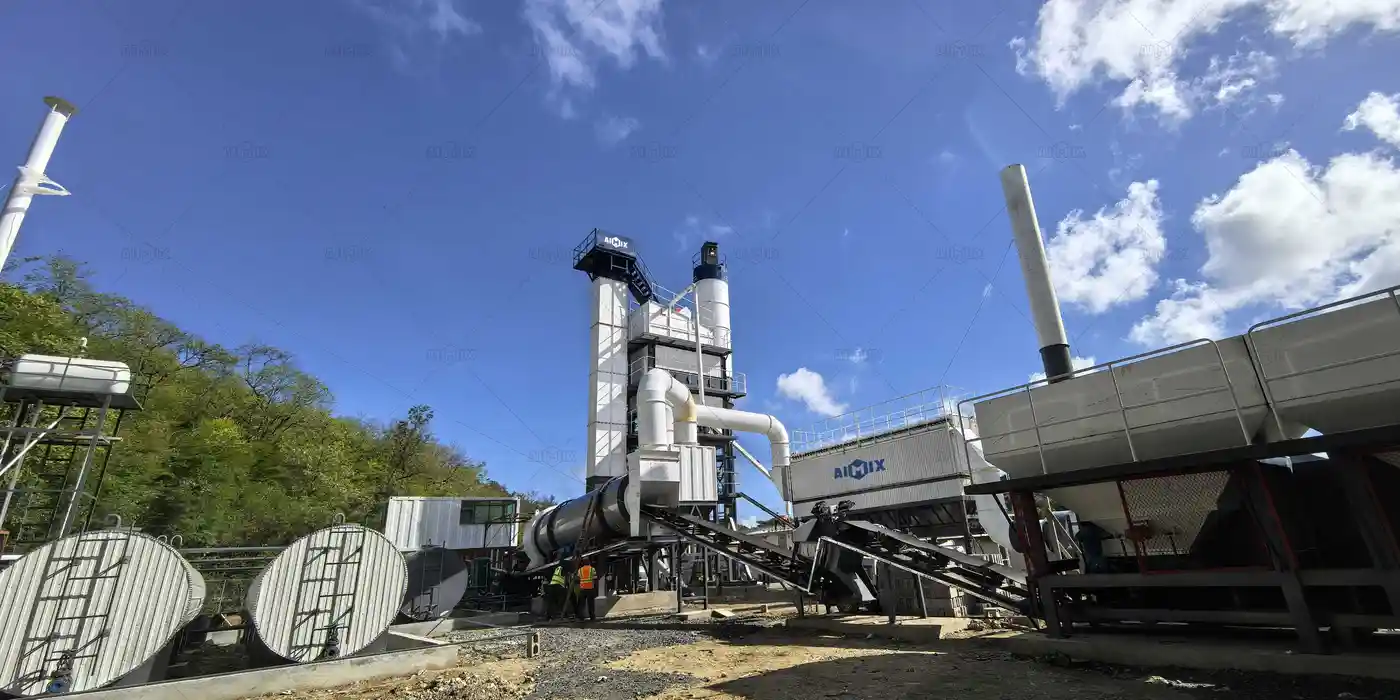
Do You Need A Hot Mix Plant For Road Construction?
For conventional road resurfacing, contractors normally need a reliable source of hot mix asphalt with stable aggregate heating, accurate material dosing, mixing, and temperature control.
A hot mix plant for road construction can therefore be evaluated based on more than its headline production rate. Contractors should also consider mix quality, fuel consumption, aggregate moisture, storage arrangements, control systems, and the ability to maintain consistent output throughout the paving shift.
This becomes especially important when the road project has strict paving schedules. A short interruption at the plant can affect truck dispatch, paver continuity, and roller operations downstream.
Should You Buy Or Rent An Asphalt Plant?
The answer depends on how the contractor will use the plant after the 10 km project.
If this is a one-time project with limited future work, renting or using an existing nearby asphalt supplier may reduce equipment ownership risk. However, that option depends heavily on asphalt availability, delivery distance, price, and supply reliability.
Buying a plant becomes more attractive when the contractor has several road projects in the pipeline.
For example, a contractor may use a 100 or 120 t/h asphalt plant for the initial 10 km resurfacing project and then move it to another road project. In that situation, plant utilization becomes an important part of the investment calculation.
The contractor should therefore evaluate not only the current project but also the expected workload over the next several years.
What Other Factors Should Contractors Check?
Production capacity is important, but it is only one part of asphalt plant selection. Before placing an order, contractors should check the complete operating conditions.
Aggregate Supply
The plant needs a stable supply of correctly sized and properly prepared aggregates. If the crushing plant cannot provide enough material, increasing asphalt plant capacity will not solve the production problem.
Aggregate Moisture
Wet aggregates require more drying energy and can affect production efficiency. This becomes particularly important in humid or rainy regions.
Fuel And Energy Costs
The burner and drying system consume significant energy. Contractors should consider local fuel prices and aggregate moisture when estimating operating costs.
Dust And Environmental Requirements
Local environmental regulations can affect plant configuration, dust collection, storage, and emissions management. The project location should therefore be evaluated before finalizing the plant design.
Future Production Requirements
If the contractor expects additional road construction projects, it may make sense to choose a plant with some additional capacity. This can improve long-term utilization instead of limiting the decision to one 10 km project.
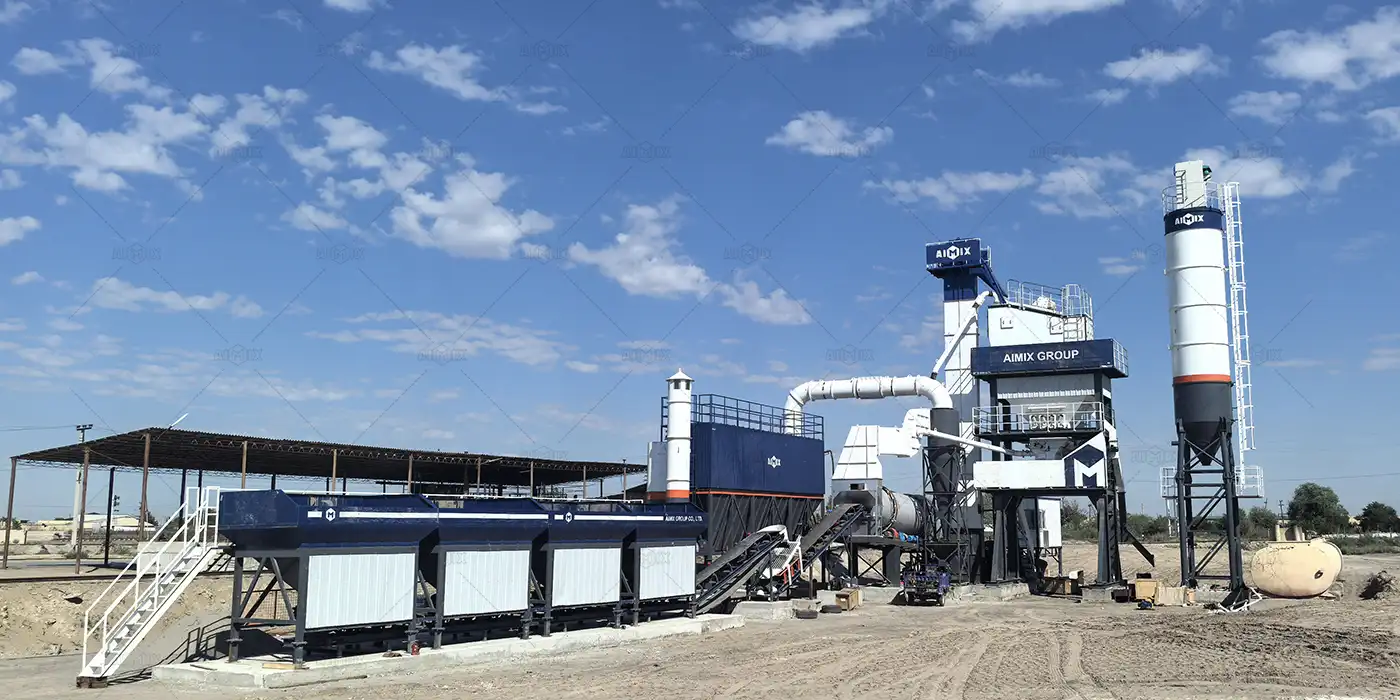
How Does The Manufacturer Affect The Final Decision?
Once the required capacity has been determined, contractors should also evaluate who will supply and support the plant.
The asphalt plant manufacturer should be assessed according to equipment configuration, production experience, quality control, installation support, spare parts availability, commissioning, and after-sales service.
This matters because asphalt production equipment is a long-term investment. A plant may operate for many years, and the cost of downtime can quickly exceed the initial difference between two equipment quotations.
Contractors should therefore compare the complete supply package instead of comparing only the purchase price.
A Practical Capacity Selection Example
Consider a contractor resurfacing a 10 km, 7 m wide road with a 50 mm asphalt overlay.
The estimated asphalt requirement is approximately 8,225 tonnes. Suppose the contractor wants to complete the main resurfacing operation in 12 working days.
The average daily demand is about 686 tonnes. With eight production hours per day, the average hourly requirement is around 86 t/h.
At this point, a plant rated at 80 t/h would provide little margin. A 100 t/h plant offers a better production buffer. A 120 t/h plant could provide even more flexibility if the contractor wants to shorten the schedule, handle production interruptions, or use the plant for other projects.
Therefore, a 100–120 t/h asphalt mixing plant would be a practical range for this example, provided that the aggregate supply, truck fleet, paver, and site logistics can support the corresponding production rate.
This example also shows why capacity selection should start with project data instead of relying on a standard plant size.
Final Checklist Before Choosing An Asphalt Plant
Before making a final decision, contractors can review the following questions:
- What is the actual road length to be resurfaced?
- What is the average paving width?
- What is the designed overlay thickness?
- What asphalt density should be used for estimation?
- How many tonnes of asphalt are required in total?
- How many tonnes must be produced each day?
- How many working hours are available each day?
- How long is the asphalt haul distance?
- How many trucks can continuously feed the paver?
- What is the paver’s practical paving rate?
- Will the plant serve only one project or several projects?
- What local fuel, environmental, and installation requirements apply?
These questions provide a much more reliable basis for plant selection than road length alone.
Conclusion: Choose Capacity Around The Whole Project
So, what asphalt plant capacity is needed for a 10 km road resurfacing project?
There is no single capacity that fits every 10 km road. However, for a medium-sized project with a 7 m paving width and a 50 mm overlay, the asphalt demand can be around 8,200 tonnes. If the contractor needs to produce roughly 650–700 tonnes per day, an 80–100 t/h plant may be sufficient under suitable operating conditions. If the schedule is tighter or the contractor needs more production flexibility, a 100–120 t/h plant can provide a more practical margin.
Most importantly, the plant should not be evaluated separately from the paving operation. Aggregate supply, drying efficiency, truck cycles, paver capacity, roller availability, working hours, and haul distance all affect the real production result.
For contractors, the best asphalt plant is therefore not necessarily the biggest one. It is the plant that can reliably supply the required tonnes per day, support the paving schedule, control operating costs, and remain useful for future projects.
If you are planning a 10 km resurfacing project, share the road width, overlay thickness, target completion days, daily working hours, asphalt haul distance, and expected asphalt mixture type. These figures can be used to work backward from your paving requirement and determine a more suitable asphalt plant capacity, production setup, and supporting equipment.