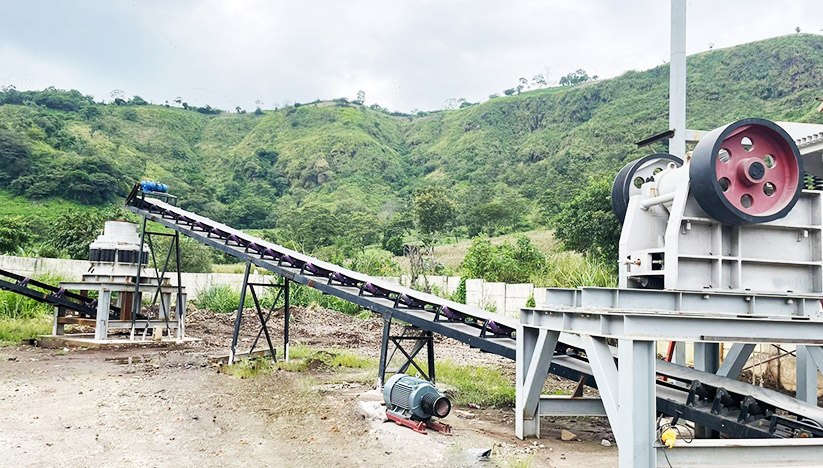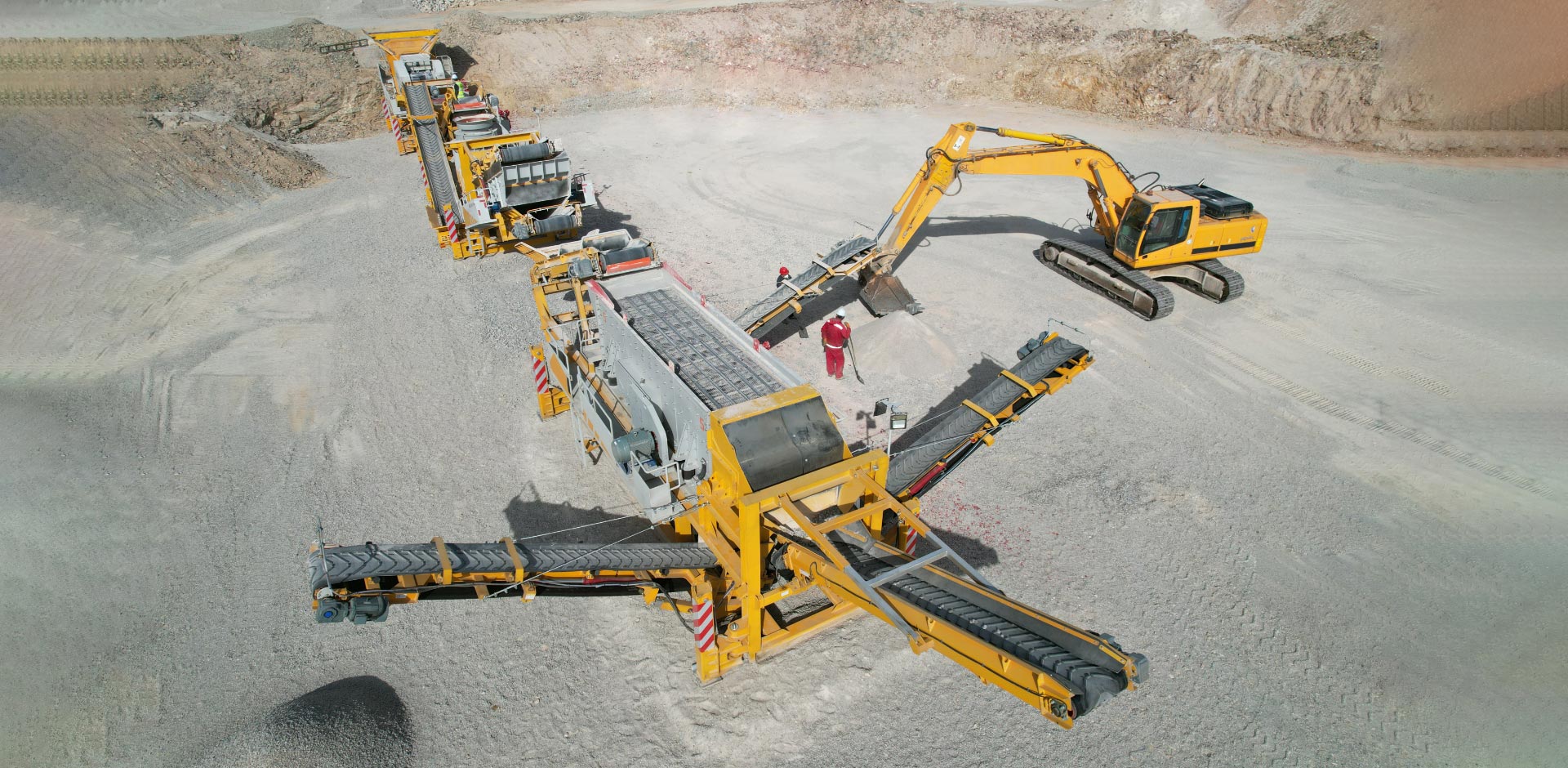
A crusher plant project cost feasibility study helps investors determine whether an aggregate production business can generate sufficient returns to justify its initial investment. Before purchasing equipment, investors need to evaluate raw material availability, local aggregate demand, production requirements, transportation expenses, and expected revenue. A project with low equipment costs may still be unprofitable if the quarry has limited reserves, customers are too far away, or the plant cannot consistently produce the required aggregate sizes. Evaluating these factors together provides a more reliable basis for investment decisions.
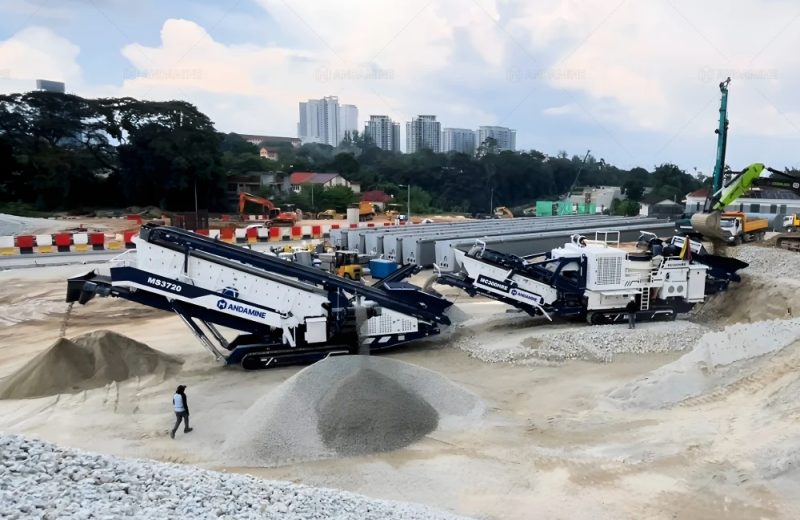
Evaluate Raw Material Supply and Quarry Conditions
Raw material availability determines how consistently a crusher plant can operate and how long the investment can generate revenue. Investors should assess estimated reserves, geological characteristics, extraction permissions, and expected quarry life before selecting equipment capacity.
Rock type also affects the project budget. Granite and basalt generally require more wear-resistant components than softer limestone, potentially increasing maintenance costs and reducing the service life of some crusher parts. Feed size, hardness, abrasiveness, and moisture content influence the choice of jaw crushers, cone crushers, impact crushers, and screening equipment.
Site conditions must be evaluated alongside geological data. Difficult access roads, unstable ground, drainage requirements, and long distances between the quarry and processing area can increase construction and transportation expenses. For a remote project, a mobile crusher plant may reduce foundation requirements and make relocation easier, while a stationary plant may be more appropriate for a long-term quarry with stable production demand.
A reliable feasibility study should estimate not only the available volume of rock but also the proportion that can be extracted, processed, and sold economically.
Measure Aggregate Demand Before Choosing Capacity
Production capacity should reflect realistic market demand rather than the largest output the investor can afford. Local construction activity, road development, concrete production, infrastructure projects, and competing aggregate suppliers all influence the quantity and price of material that a new plant can sell.
Investors should identify the main customers and their product requirements. Concrete producers may require consistent fine and coarse aggregates, while road contractors may purchase specified base materials and graded stone. These requirements determine the necessary crushing stages, screen sizes, and production settings.
A plant designed to produce several aggregate sizes may achieve better commercial flexibility than one that produces a single product. However, additional screens, conveyors, and crushing stages increase capital costs and maintenance requirements. The configuration should match the products that customers actually purchase.
Market research should also account for transportation. Aggregates are heavy, relatively low-value materials, so delivery costs can significantly affect the competitive selling price. A plant close to construction projects may outperform a larger facility located far from customers, even if its production cost per ton is slightly higher.
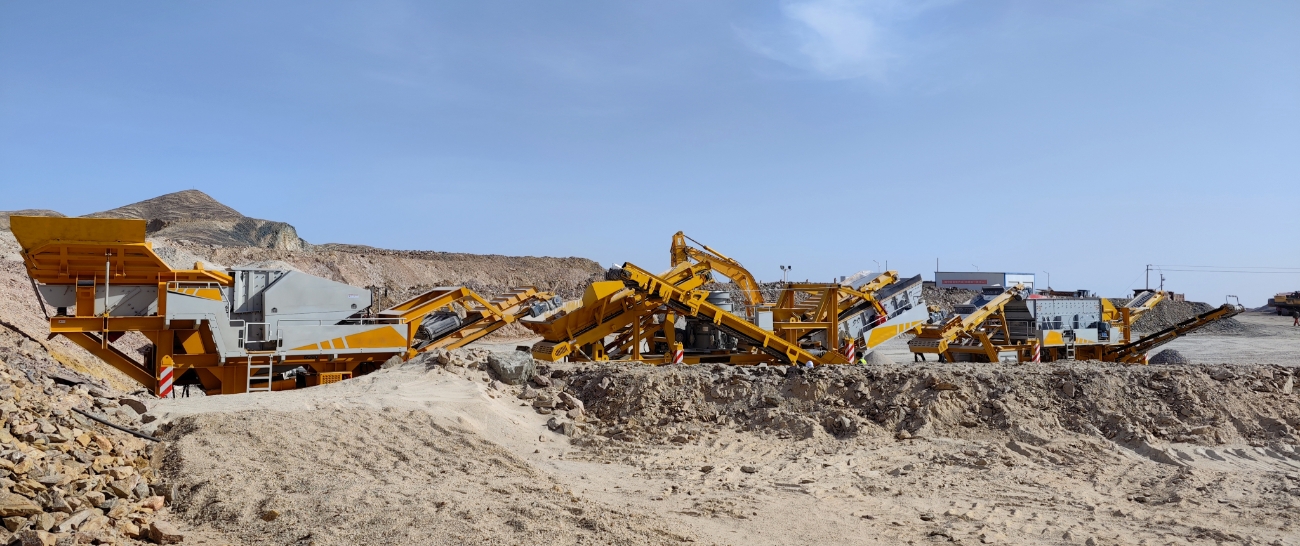
Calculate the Total Crusher Plant Project Cost
The equipment quotation represents only one part of the total investment. A practical budget should include equipment procurement, freight, customs charges where applicable, site preparation, foundations, electrical systems, installation, commissioning, and initial spare parts.
Operating expenses must be calculated separately. Typical costs include fuel or electricity, labor, excavator and loader operation, wear parts, maintenance, water for dust suppression, and material transportation. Depending on the project, permitting, environmental controls, land preparation, and financing costs may also be significant.
- Initial capital investment: Crushing and screening equipment, installation, civil works, utilities, transportation, and commissioning.
- Working capital: Funds for fuel, labor, spare parts, and other expenses before customer payments are received.
- Operating cost per ton: Total production expenses divided by saleable aggregate output.
- Contingency allowance: A reserve for uncertain site conditions, delivery changes, and unexpected modifications.
Comparing suppliers on a consistent scope is essential. One quotation may include conveyors, screens, electrical controls, and commissioning, while another may cover only the main crusher. Comparing headline prices without checking these differences can produce an inaccurate feasibility assessment.
Assess Regional Market Conditions in South America
Regional demand, logistics, and material characteristics should be considered when evaluating projects in South America. For a crusher plant in Bolivia, investors should investigate the target market, quarry access, transportation routes, and availability of technical support. Projects serving remote construction areas may benefit from mobile equipment if relocation flexibility offsets its additional purchase or operating costs.
A stone crusher plant in Chile should be evaluated against the specific requirements of its intended market, whether it supplies road construction, concrete production, quarry operations, or mining-related infrastructure. Rock abrasiveness, site access, power availability, and the distance to customers can materially affect equipment selection and operating expenses.
For a crusher plant in Peru, terrain and transport conditions deserve particular attention when the proposed site is in mountainous or remote areas. Access-road limitations, elevation-related operating conditions, installation logistics, and the availability of replacement parts may influence both the initial budget and the plant’s achievable production rate.
These regional considerations should be verified for the actual project location rather than treated as fixed national characteristics. Investors should obtain local aggregate prices, transport quotations, geological information, applicable permits, and supplier delivery estimates before finalizing the budget.
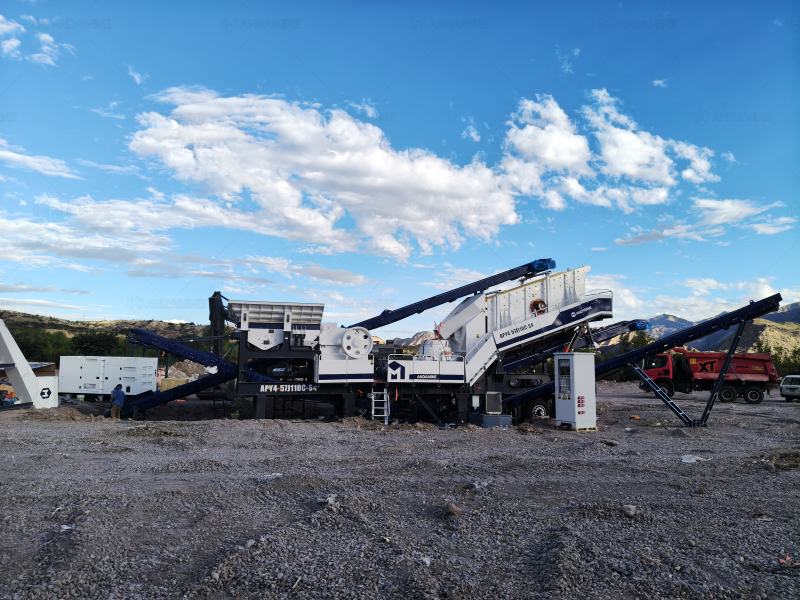
Estimate Investment Recovery and Break-Even Output
Investment recovery depends on saleable production, realized selling prices, and total costs—not simply the crusher’s rated capacity. A plant rated at 200 tons per hour will not necessarily produce 200 saleable tons every operating hour. Feed interruptions, maintenance, screen limitations, material variability, and product rejection can reduce actual output.
Investors can estimate annual saleable production using the following relationship:
Annual saleable output = Operating hours per year × Average actual throughput × Saleable yield
For example, a plant operating 1,800 hours annually at an average throughput of 120 tons per hour with a saleable yield of 85% would produce approximately 183,600 saleable tons per year.
Annual operating profit can then be estimated by subtracting annual operating expenses from aggregate sales revenue. A simplified break-even calculation divides fixed annual costs by the contribution margin per ton, which is the selling price per ton minus variable cost per ton.
The investment payback period can be approximated by dividing the initial investment by annual net cash flow. This simplified estimate should be supplemented by a cash-flow forecast that considers taxes, financing, replacement equipment, working capital, and changes in demand.
Test Risks Before Approving the Investment
A feasibility study should test how financial results change when key assumptions are less favorable than expected. Relevant scenarios include lower aggregate selling prices, higher fuel costs, reduced operating hours, lower saleable yield, and delayed customer payments.
Investors should also assess whether the project remains viable if production begins later than planned or if some aggregate sizes sell more slowly than expected. A staged investment may reduce risk when market demand is uncertain: the business can begin with the essential crushing and screening configuration and expand when sales volumes justify additional capacity.
The final decision should be based on verified raw material reserves, realistic sales forecasts, a complete project budget, and a conservative estimate of achievable production. By connecting geological conditions, market demand, operating costs, and investment recovery, a crusher plant project cost feasibility study helps investors identify financial risks before committing substantial capital.