Let’s get excited about numbers for a moment. I know, I know. Spreadsheets are not usually thrilling. But when those numbers determine whether your concrete business in Saudi Arabia thrives or just survives, they become very interesting indeed. Here is the reality that many contractors discover too late. The price of concrete batching plant is just the ticket to the show. The real expense happens after the machine is bolted to the ground. In Saudi Arabia, where temperatures hit 50°C, sand gets everywhere, and electricity costs are rising, the total cost of ownership (TCO) can be double or triple the purchase price over five years. This guide breaks down those costs into three simple categories: what you pay upfront, what you pay to run it, and what you pay to keep it alive. Grab a cup of strong coffee. Let us make you a TCO expert by the end of this article.
Purchase Costs: More Than Just the Machine
The Base Price and What It Actually Includes
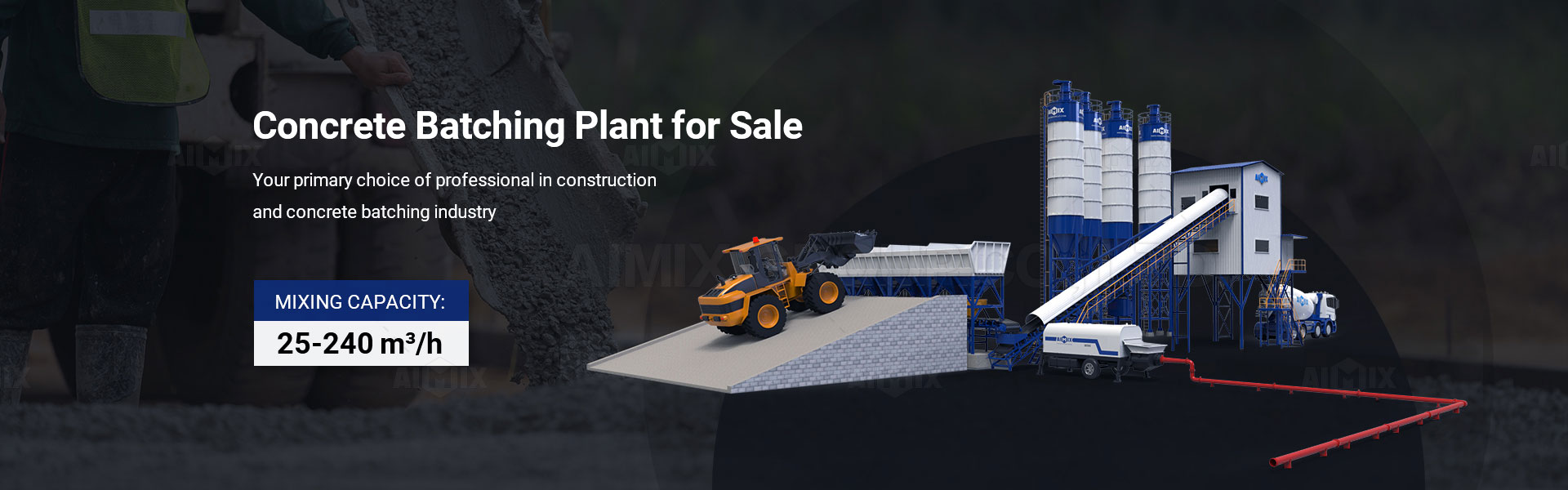
The base price of a concrete batching plant in Saudi Arabia varies wildly. A small, Chinese-made stationary plant (30 cubic meters per hour) might cost SAR 150,000 to SAR 250,000. A larger European or Turkish plant (60 to 120 cubic meters per hour) can range from SAR 500,000 to SAR 1.5 million. But here is the catch. The base price often excludes critical components. Does it include the cement silo? Often not. Add SAR 30,000 to SAR 80,000. Does it include the screw conveyor? Maybe not. Add another SAR 15,000 to SAR 30,000. Does it include the control system software license? Sometimes that is an extra fee. The enthusiastic advice is to ask for a “complete plant” price. Get it in writing. Every nut. Every bolt. Every meter of cable. AIMIX and other reputable suppliers will provide a detailed list. If a supplier gives you a vague quote, run away. You are looking at a future of surprise invoices.
Delivery, Foundation, and Installation
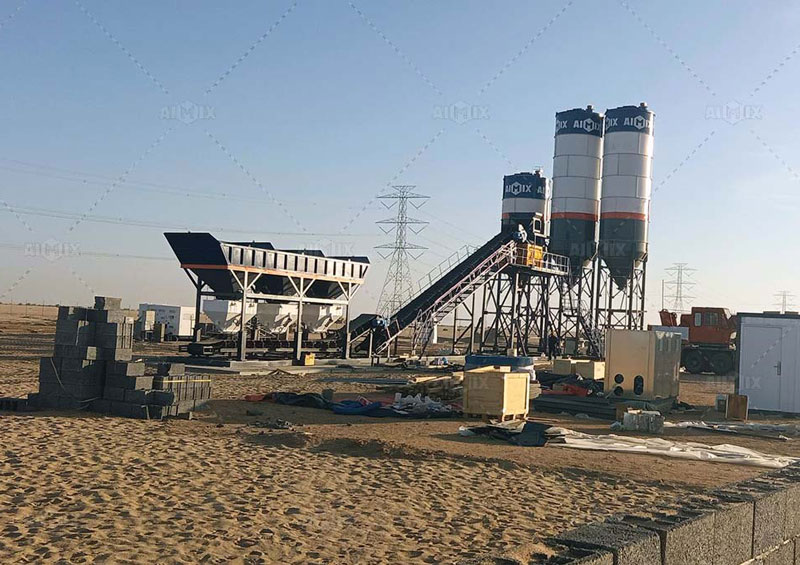
The machine is on the truck. Now the real work begins. Delivery from Jeddah Port to your site can cost SAR 5,000 to SAR 20,000 depending on distance. Then you need a foundation. A batching plant is heavy. It vibrates. It needs a reinforced concrete slab that can handle 50 to 100 tonnes of dynamic load. A proper foundation costs SAR 30,000 to SAR 100,000. Do not skip this. I have seen plants installed on compacted sand. They sink. They tilt. They crack. Then you need installation. A team of technicians will spend two to four weeks assembling the plant, connecting the electricals, and calibrating the scales. Installation costs SAR 30,000 to SAR 80,000. Some suppliers include this in the purchase price. Many do not. Ask before you sign. The total purchase cost—machine, silo, delivery, foundation, installation—can easily be 50% higher than the base price. Budget for it.
Operating Costs: The Money That Flows Every Day
Electricity and the Power of Three-Phase
Here is where the enthusiasm turns into serious calculation. A batching plant for sale is a hungry beast. A typical 60 cubic meter per hour plant has a connected load of 80 to 150 kilowatts. Running at full capacity for eight hours, it consumes 640 to 1,200 kilowatt-hours per day. At Saudi electricity rates (approximately SAR 0.18 to SAR 0.32 per kWh for commercial users), that is SAR 115 to SAR 384 per day. Over 250 operating days per year, that is SAR 28,750 to SAR 96,000 annually. The difference depends on plant efficiency. A plant with high-efficiency motors and variable frequency drives consumes less. A plant with old, inefficient motors consumes more. The enthusiastic buyer asks for the expected power consumption per cubic meter of concrete. A good plant uses 1.5 to 2.5 kWh per cubic meter. A bad plant uses 3.5 kWh or more. That difference is thousands of riyals every year.
Water and the Saudi Premium
Water is expensive in Saudi Arabia. A batching plant uses water for two purposes: mixing concrete and washing out. A typical mix uses 150 to 200 litres of water per cubic meter of concrete. A plant producing 50,000 cubic meters per year uses 7.5 to 10 million litres of water annually. That is 7,500 to 10,000 cubic meters. Industrial water rates vary but can be SAR 5 to SAR 15 per cubic meter. That is SAR 37,500 to SAR 150,000 per year. Then there is wash water. Many plants recycle their wash water. This is not just environmentally friendly. It is economically essential. A recycling system costs SAR 30,000 to SAR 80,000 upfront. It pays for itself in water savings within one to two years. The contractor who skips recycling is not saving money. They are pouring riyals down the drain.
Maintenance Costs: Keeping the Beast Alive
Wear Parts and the Schedule You Cannot Ignore
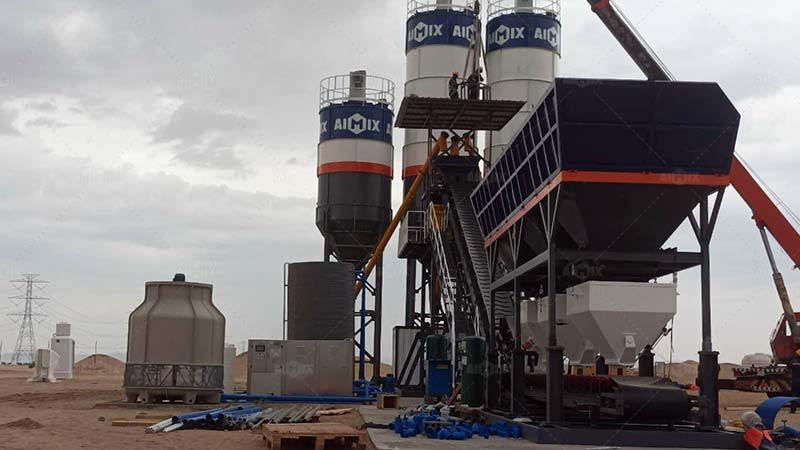
Now let us talk about the inevitable. Wear parts. A batching plant has many components that wear out. Mixer blades and liners are the most frequent. A set of blades might last 10,000 to 30,000 cubic meters, depending on the abrasiveness of your aggregates. A set costs SAR 5,000 to SAR 15,000. Replace them twice a year if you produce 50,000 cubic meters annually. That is SAR 10,000 to SAR 30,000 per year. Then there are conveyor belts. A set of belts costs SAR 10,000 to SAR 30,000 and lasts two to four years. Bearings. Sensors. Hydraulic hoses. The list goes on. The total annual wear parts cost is typically 2% to 5% of the plant’s purchase price. A SAR 500,000 plant has SAR 10,000 to SAR 25,000 in annual wear parts. A SAR 1.5 million plant has SAR 30,000 to SAR 75,000. These are not optional. They are as certain as the sunrise.
Labour and the Skill Gap
The final major cost is labour. A batching plant needs operators, mechanics, and loaders. A typical plant employs three to five people per shift. One plant operator (SAR 4,000 to SAR 8,000 per month). One loader operator (SAR 3,000 to SAR 6,000 per month). One mechanic (SAR 5,000 to SAR 10,000 per month). That is SAR 12,000 to SAR 24,000 per month in labour costs. Over a year, SAR 144,000 to SAR 288,000. And that is for one shift. Two shifts double the cost. The enthusiastic advice is to invest in training. A well-trained operator can handle minor maintenance. They can identify problems before they become failures. They can reduce downtime. The extra SAR 1,000 per month for a skilled operator is the best money you will spend. Also, consider automation. A fully automatic concrete batching plant in Saudi Arabia requires fewer operators. The upfront cost is higher. The labour saving over five years is substantial. Do the math. Automation often wins.
The Five-Year TCO Model
A Realistic Example for a 60m³/h Plant
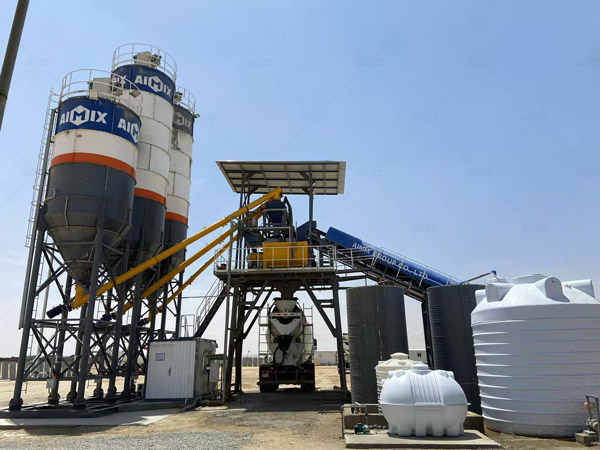
Let us put it all together. A 60 cubic meter per hour plant purchased for SAR 800,000. Add silo (SAR 50,000), delivery (SAR 15,000), foundation (SAR 50,000), installation (SAR 40,000). Total purchase and setup: SAR 955,000. Annual operating costs: electricity (SAR 60,000), water (SAR 50,000), labour (SAR 200,000). Annual maintenance: wear parts (SAR 30,000), occasional repairs (SAR 20,000). Total annual operating and maintenance: SAR 360,000. Over five years: SAR 1.8 million. Add the purchase concrete batching plant cost is SAR 955,000. Total five-year TCO: SAR 2.755 million. The purchase price was only 35% of the total. The operating and maintenance costs were 65%. This is why TCO matters. A plant that costs SAR 600,000 but has higher energy consumption and more frequent wear parts might have a five-year TCO of SAR 2.9 million. It is cheaper to buy. It is more expensive to own. Choose the plant with the lower TCO, not the lower price tag. Your bank account will thank you with enthusiasm.