A 30-ton overhead crane is widely used in medium-to-heavy industrial applications such as steel fabrication workshops, machinery assembly plants, warehouses, logistics centers, and precast concrete production facilities. At this capacity level, the crane is expected to deliver not only stable lifting performance but also long-term durability under frequent and sometimes harsh operating conditions.
While structural design, manufacturing quality, and maintenance are all important, one of the most fundamental factors that determines crane lifespan is often underestimated: material selection.
The choice of materials used in the main girder, end carriages, hoisting system, wheels, fasteners, and electrical protection components directly influences fatigue resistance, corrosion protection, load-bearing capacity, and long-term operational reliability.
This article explains in detail how material selection impacts the durability of a 30 ton overhead crane and why it is a critical engineering decision in crane design.
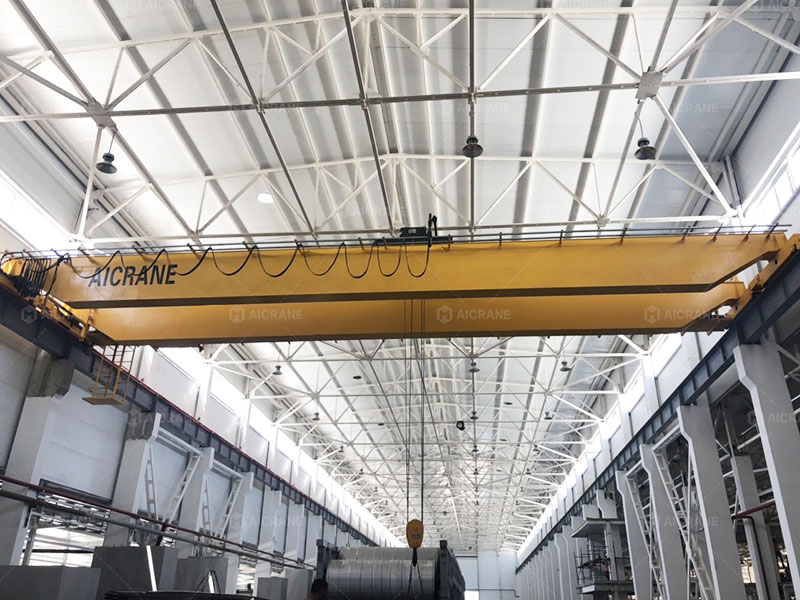
1. The Role of Materials in Crane Structural Integrity
The structure of a 30-ton overhead crane is continuously exposed to:
- Static load from lifted materials
- Dynamic load from acceleration and braking
- Cyclic fatigue from repeated operation
- Environmental stress such as humidity and temperature variation
The material used must therefore satisfy three key requirements:
- High strength
- Good toughness
- Long fatigue life
If the wrong material is selected, even a well-designed crane will experience premature deformation or cracking.
2. High-Strength Steel for Main Girder Durability
The main girder is the backbone of a 30-ton overhead crane, and its material selection is the most critical factor in structural durability.
High-Strength Low-Alloy Steel (HSLA)
Most modern double girder cranes use HSLA steel, which offers:
- High tensile strength
- Improved fatigue resistance
- Reduced structural weight
- Excellent weldability
This combination allows the crane to carry heavy loads without excessive deformation.
Why Strength Alone Is Not Enough
A common misconception is that stronger steel automatically means better durability. In reality:
- Overly rigid steel can become brittle
- Poor toughness increases crack propagation risk
- Inadequate fatigue resistance leads to early failure
Therefore, engineers balance:
- Strength
- Ductility
- Toughness
to ensure long-term performance under cyclic loading.
3. Material Fatigue Resistance and Cyclic Loading Performance
A 30-ton overhead crane is not damaged by a single overload event, but by millions of repeated stress cycles over its lifetime.
Fatigue Behavior of Steel Materials
Different materials behave differently under cyclic stress:
- Low-grade steel develops micro-cracks quickly
- Medium-carbon steel offers moderate fatigue resistance
- HSLA steel provides superior long-term fatigue performance
Crack Initiation and Propagation
Material quality directly affects:
- Where cracks begin (usually weld zones or stress points)
- How fast cracks grow
- Whether cracks can be detected early or become catastrophic
High-quality steel delays crack initiation, significantly extending heavy overhead crane lifespan.
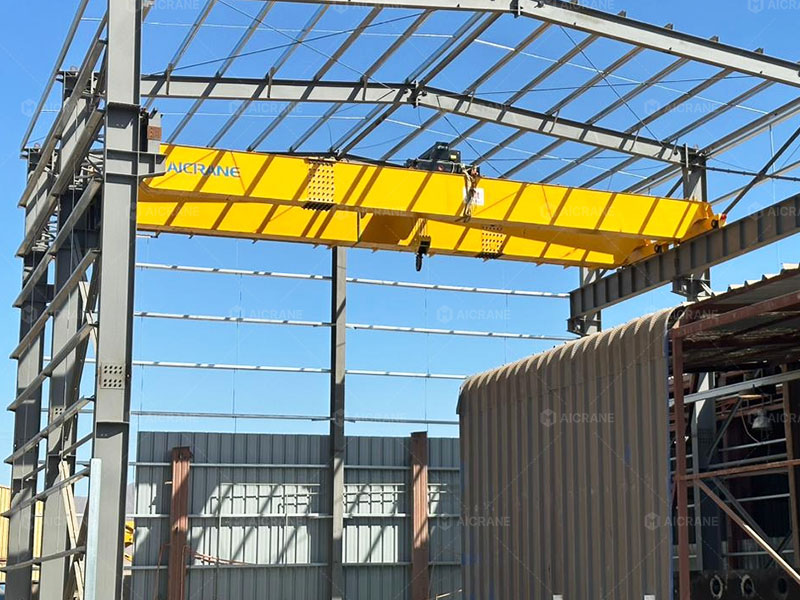
4. End Carriage Material Selection and Load Transfer Stability
End carriages transfer the entire crane load to the runway rails. Their material selection directly affects structural stability.
Reinforced Structural Steel
High-durability end carriages typically use:
- Thick steel plates with high yield strength
- Weldable structural steel grades
- Reinforced box-type frame materials
These materials prevent:
- Permanent deformation
- Wheel misalignment
- Uneven load distribution
Impact on Rail and Wheel Wear
If weaker materials are used:
- Wheel flanges wear faster
- Rails deform unevenly
- Vibration increases across the structure
Strong materials ensure smooth load transfer and longer system life.
5. Hoisting System Materials and Mechanical Longevity
The hoisting system is one of the most heavily stressed components in a 30-ton crane.
Wire Rope Material Quality
High-quality cranes use:
- High-carbon steel wire ropes
- Galvanized or anti-corrosion coated strands
- Improved fatigue-resistant rope construction
These features increase:
- Flexibility under bending cycles
- Resistance to abrasion
- Corrosion protection in humid environments
Drum and Sheave Materials
Drums and sheaves are typically made from:
- Forged alloy steel
- Hardened cast steel
These materials ensure:
- Smooth rope winding
- Reduced surface wear
- High resistance to deformation under load
6. Wheel Material and Rail Interaction Durability
Wheels are constantly under rolling stress and are critical to overhead crane movement reliability.
Forged Steel Wheels
Most durable 30-ton cranes use:
- Forged steel wheels instead of cast iron
- Surface heat-treated hardness layers
- High wear resistance properties
Forged steel improves:
- Impact resistance
- Fatigue life
- Load distribution efficiency
Material Hardness Balance
Wheel materials must balance:
- Hardness (for wear resistance)
- Toughness (for impact resistance)
If too hard → brittle failure risk
If too soft → rapid wear
7. Fasteners and Connection Material Quality
Even small components like bolts and fasteners play a major role in crane durability.
High-Strength Bolts
Industrial cranes use:
- Grade 8.8, 10.9, or higher bolts
- Heat-treated alloy steel fasteners
These ensure:
- Strong joint integrity
- Resistance to vibration loosening
- Long-term structural stability
Corrosion Resistance in Fasteners
In outdoor environments:
- Galvanized bolts prevent rust
- Stainless steel fasteners are used in coastal areas
Without proper material selection, corrosion at connection points can weaken the entire structure.
8. Corrosion-Resistant Materials for Harsh Environments
Environmental exposure significantly affects crane lifespan.
Surface Protection Materials
Durable cranes use:
- Epoxy-coated steel surfaces
- Polyurethane protective layers
- Galvanized structural components
These materials protect against:
- Moisture
- Chemicals
- Industrial dust
- UV exposure
Stainless Steel for Critical Areas
In highly corrosive environments:
- Electrical enclosures
- Cable trays
- Fasteners
may use stainless steel to prevent long-term degradation.
9. Electrical System Material Selection and Reliability
Material selection also extends to electrical components, not just structural steel.
Cable Insulation Materials
High-quality cranes use:
- Heat-resistant rubber insulation
- Oil-resistant polymer coatings
- UV-stable cable jackets
These materials ensure long-term performance in harsh industrial environments.
Control Cabinet Materials
Electrical cabinets are made from:
- Powder-coated steel sheets
- Stainless steel (for extreme environments)
This protects sensitive electronics from:
- Moisture
- Dust
- Corrosion
10. Thermal Resistance and Temperature Adaptation Materials
30-ton overhead cranes often operate in environments with extreme temperature variations.
High-Temperature Resistance
In steel plants or foundries:
- Heat-resistant alloys prevent deformation
- Special lubricants maintain performance
- Thermal expansion-tolerant materials reduce stress
Low-Temperature Performance
In cold regions:
- Low-temperature steel prevents brittleness
- Flexible polymers maintain insulation performance
- Cold-resistant lubricants ensure smooth operation
Material behavior under temperature change is critical for long-term durability.
11. Weight Optimization Through Material Engineering
Material selection also affects crane efficiency.
Reducing Self-Weight Without Losing Strength
Engineers optimize materials to:
- Reduce unnecessary weight
- Maintain structural strength
- Improve energy efficiency
Lighter yet strong materials reduce:
- Motor load
- Structural stress
- Long-term wear
This indirectly extends crane lifespan.
12. Cost vs Durability Balance in Material Selection
Choosing materials is always a balance between cost and performance.
Low-Cost Materials
- Lower upfront cost
- Shorter service life
- Higher maintenance frequency
High-Quality Materials
- Higher initial investment
- Longer operational life
- Lower total lifecycle cost
For industrial users, investing in better materials often results in:
- Reduced downtime
- Lower repair costs
- Higher productivity
Conclusion
Material selection is one of the most fundamental engineering factors determining the durability of a 30-ton overhead crane. It influences every aspect of crane performance, including structural strength, fatigue resistance, corrosion protection, mechanical reliability, and environmental adaptability.
Key materials such as HSLA steel for girders, forged steel for wheels, high-quality alloys for hoisting components, and corrosion-resistant coatings all work together to ensure long-term stability and safety.
When properly selected and engineered, materials enable a 30-ton overhead crane to deliver decades of reliable performance, even in demanding industrial environments. Ultimately, the durability of the crane is not just about design—it is about the science of material engineering behind it.