Efficient workflow management is essential for every precast concrete yard. From mold preparation and reinforcement placement to concrete pouring, curing, storage, and transportation, each production stage depends heavily on reliable material handling systems. As precast concrete projects become larger and more demanding, manufacturers need lifting equipment capable of handling heavy loads continuously while maintaining safety, precision, and production efficiency.
Among the many lifting solutions available, double girder overhead cranes have become one of the most effective tools for optimizing workflow in precast concrete yards. Their high lifting capacity, wide span, stable operation, and adaptability make them ideal for handling precast components throughout the entire production process.
This article explores how double girder overhead cranes improve workflow efficiency in precast yards and why they are widely used in modern precast concrete production facilities.
Why Workflow Optimization Matters in Precast Yards
Precast concrete production involves multiple interconnected operations. Delays or inefficiencies in one stage can affect the entire manufacturing cycle. Poor workflow management often results in:
- Production bottlenecks
- Increased labor costs
- Longer delivery times
- Unsafe lifting operations
- Equipment congestion
- Higher risk of component damage
- Reduced yard productivity
To maintain consistent production output, precast yards require an organized material handling system capable of moving heavy concrete products quickly and safely between workstations.
This is where double girder overhead cranes play a critical role.
What Is a Double Girder Overhead Crane?
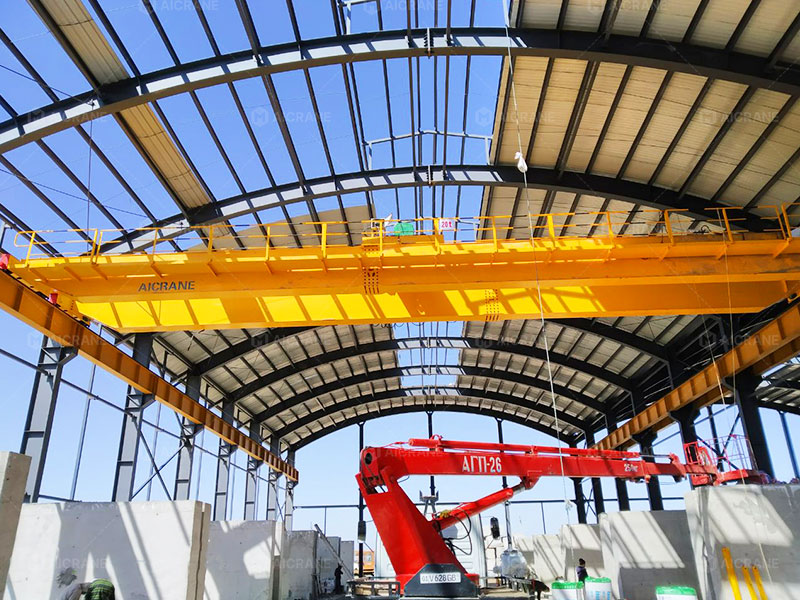
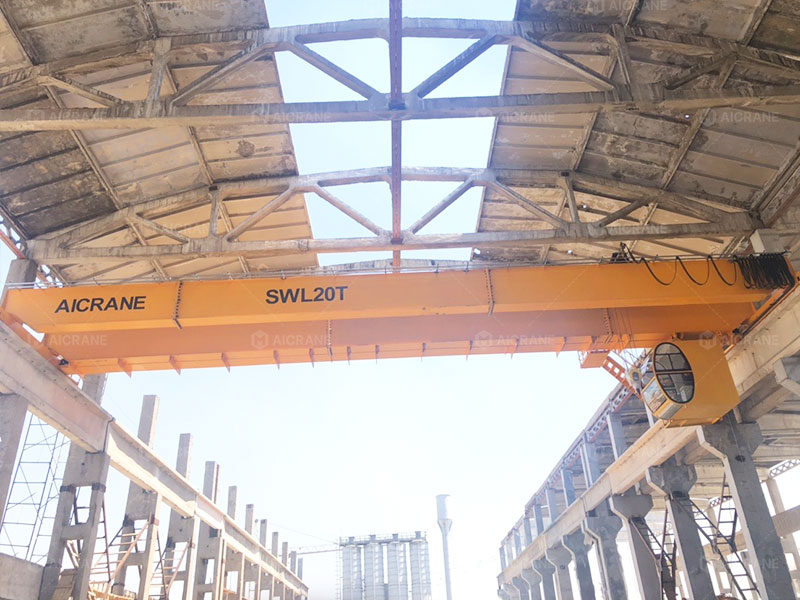
A double girder overhead crane is a heavy-duty lifting system consisting of two bridge girders mounted on runway beams. The hoist trolley travels along the girders, allowing the crane to move loads horizontally and vertically throughout the workshop or production area.
These heavy duty overhead cranes are widely used in precast yards because they offer:
- High lifting capacities
- Large span coverage
- Excellent load stability
- Precise positioning
- Continuous duty performance
- Long service life
Typical lifting capacities for precast applications range from 10 tons to more than 500 tons depending on the size and weight of the concrete components being produced.
Key Areas Where Double Girder Overhead Cranes Optimize Workflow
Mold Handling and Preparation
Precast production begins with mold preparation. Steel molds used for beams, wall panels, columns, slabs, and pipes are often large and extremely heavy. Manual movement or inefficient lifting systems can slow down production and create safety hazards.
Double girder overhead cranes streamline this process by:
- Transporting molds between workstations
- Positioning molds accurately for setup
- Rotating or flipping molds when required
- Reducing manual handling
With precise crane control systems, operators can place molds quickly and accurately, minimizing setup time and improving production flow.
Reinforcement Cage Transportation
Reinforcement cages are essential components in precast concrete manufacturing. These cages must be transported safely from fabrication areas to mold assembly stations.
Using double girder overhead cranes for reinforcement handling offers several advantages:
- Faster transfer between stations
- Reduced labor intensity
- Lower risk of reinforcement deformation
- Improved workplace safety
The crane’s stable lifting performance ensures that large reinforcement structures can be moved without excessive swinging or impact.
Concrete Component Demolding
After curing, precast components must be removed from molds carefully to avoid cracking or surface damage. This stage requires highly stable and controlled lifting operations.
Double girder overhead cranes improve demolding efficiency through:
- Smooth lifting movements
- Precise speed control
- Synchronized lifting systems
- Reduced vibration during handling
For large precast beams or wall panels, synchronized dual-hoist systems can provide balanced lifting, reducing stress on the concrete structure.
Internal Transportation Between Production Zones
One of the most important functions of overhead cranes in precast yards is transporting finished or semi-finished products between different production zones.
Typical transportation tasks include:
- Moving components from casting to curing areas
- Transferring products to storage yards
- Loading products onto trucks or trailers
- Delivering materials to assembly stations
Without an efficient crane system, forklifts and mobile equipment can create traffic congestion and slow production. Double girder overhead cranes provide overhead transportation, freeing up valuable ground space and improving yard organization.
Finished Product Storage Management
Efficient storage handling is critical in busy precast yards where large numbers of concrete products must be organized before shipment.
Double girder overhead cranes optimize storage operations by:
- Stacking components accurately
- Maximizing vertical storage space
- Reducing handling time
- Improving inventory organization
Precise positioning capabilities help operators place heavy products safely in designated storage areas without damaging adjacent components.
Advantages of Double Girder Overhead Cranes in Precast Yards
High Lifting Capacity for Heavy Components
Precast concrete elements can weigh tens or even hundreds of tons. Double girder 20 to 500 ton overhead cranes are specifically designed for heavy-duty applications and can safely handle:
- Precast bridge girders
- Concrete wall panels
- Tunnel segments
- Concrete pipes
- Precast columns
- Large slabs
Their robust structural design allows continuous operation under demanding production conditions.
Better Space Utilization
Unlike mobile cranes or forklifts, overhead cranes operate above the workspace. This significantly improves floor space utilization in precast yards.
Benefits include:
- Reduced ground traffic
- More organized production areas
- Easier movement of workers and equipment
- Increased storage capacity
Efficient use of space is especially important in large-scale precast factories with high production volumes.
Improved Production Efficiency
Workflow optimization directly impacts production efficiency. Double girder overhead cranes help accelerate production cycles by reducing waiting times between operations.
Key productivity improvements include:
- Faster material movement
- Reduced equipment downtime
- Shorter production cycles
- Better coordination between workstations
Automated or semi-automated crane systems can further improve operational efficiency.
Enhanced Safety During Heavy Lifting
Safety is a major concern in precast concrete production due to the weight and size of concrete components.
Modern double girder overhead cranes incorporate advanced safety features such as:
- Overload protection systems
- Emergency stop functions
- Anti-collision devices
- Limit switches
- Remote control operation
- Sway control technology
These features help reduce accidents, equipment damage, and operational risks.
Smart Technologies for Workflow Optimization
Modern precast plants increasingly integrate intelligent technologies into overhead crane systems to further optimize workflow.
PLC Control Systems
Programmable Logic Controller (PLC) systems improve crane automation and operational precision.
Benefits include:
- Automated movement sequences
- Reduced operator errors
- Consistent lifting performance
- Improved coordination with production lines
PLC systems can also support data monitoring and maintenance management.
Variable Frequency Drives (VFD)
VFD technology enables smooth acceleration and deceleration during crane operation.
Advantages include:
- Reduced load swing
- More precise positioning
- Lower mechanical wear
- Improved energy efficiency
This is particularly important when handling delicate or newly cured concrete components.
Remote and Wireless Control
Remote control systems improve operator visibility and flexibility.
Operators can:
- Stand closer to lifting areas
- Improve positioning accuracy
- Reduce blind spots
- Enhance safety during heavy lifting
Wireless systems also reduce cabling complexity within the facility.
Choosing the Right Double Girder Overhead Crane for a Precast Yard
Selecting the appropriate crane system is essential for achieving maximum workflow efficiency.
Important factors to consider include:
Lifting Capacity
The crane must handle the heaviest precast components safely while allowing room for future production expansion.
Typical capacities include:
- 10–50 tons for standard precast products
- 50–200 tons for bridge and infrastructure projects
- 200+ tons for specialized heavy-duty applications
Span and Lifting Height
The crane span should match the width of the production area, while lifting height must accommodate storage stacking requirements and mold dimensions.
Work Duty Classification
Precast yards usually require cranes designed for frequent and continuous operation. Selecting the correct duty classification ensures durability and long-term reliability.
Control Method
Common control options include:
- Pendant control
- Wireless remote control
- Cabin control
- Automated control systems
The best option depends on production complexity and operational preferences.
Maintenance and Long-Term Reliability
Regular maintenance is critical for ensuring continuous crane performance in demanding precast environments.
Recommended maintenance practices include:
- Daily inspection of wire ropes and hooks
- Lubrication of moving parts
- Inspection of electrical systems
- Brake testing
- Structural inspection of girders and runways
- Monitoring motor and gearbox conditions
Preventive maintenance helps reduce unexpected downtime and extends equipment lifespan.
Future Trends in Precast Yard Crane Systems
As precast concrete manufacturing becomes more automated, overhead crane technology continues evolving.
Future trends include:
- Fully automated crane operations
- AI-assisted load positioning
- Real-time production tracking
- IoT-based predictive maintenance
- Energy-efficient drive systems
- Integration with smart factory systems
These innovations will further improve production efficiency, safety, and operational control in precast yards.
Conclusion
Efficient workflow management is essential for maintaining productivity and competitiveness in modern precast concrete production. Double girder overhead cranes provide an effective solution for optimizing material handling throughout every stage of the manufacturing process.
From mold handling and reinforcement transportation to demolding, storage, and shipment preparation, these cranes help precast yards improve efficiency, reduce labor requirements, enhance safety, and maximize production capacity.
With their high lifting capabilities, precise control systems, and adaptability to demanding industrial environments, double girder overhead cranes have become indispensable equipment in modern precast concrete facilities. As automation and intelligent technologies continue advancing, these cranes will play an even greater role in improving the efficiency and reliability of precast yard operations.